The English humanist Roger Ascham (1515-1568) prescribed for the learning of Latin his famous "double translation" method, whereby students would translate selected passages from Latin to English and then back into Latin. The idea was to inculcate a sense of idiomatic propriety in both languages, at a time when composition might have to be done in either. Of course, few write in Latin anymore, but I recalled the double translation method recently when thinking about this insane project of mine. I thought it might be nearly impossible to accomplish the same sort of feat when translating between Japanese and Early Modern English (not to mention Spenser's weird archaizing), given the range of generally incompatible knowledge that would be required to pull it off. The two languages--in grammar, morphology, and semantic structure--are just so different... how to acquire a sensitive enough instinct in both? I must admit: I may be reading and translating the Japanese, but I certainly couldn't say whether or not what I'm reading is beautiful. I just don't know what the criteria are, and they do not seem to be as transferable from English as they would be among Western languages. And so, with a resounding "Alas!" I move on to the third stanza (of 55). Five lines today!
Here is the full third stanza in Spenserian, followed by the first five lines in Japanese:
Vpon a great aduenture he was bond,
That greatest Gloriana to him gaue,
That greatest Glorious Queene of Faerie lond,
To winne him worship, and her grace to haue,
Which of all earthly things he most did craue;
And euer as he rode, his hart did earne
To proue his puissance in battell braue
Vpon his foe, and his new force to learne;
Vpon his foe, a Dragon horrible and stearne.
騎士は、あのいとも偉大なグロリアーナ、
妖精の国のあのいとも偉大な栄光の女王から
命じられた大冒険に赴くところで、
これによって名誉をかち取り、女王の愛顧を得ること、
これがこの世で、この騎士の何よりの願いであった。
kishi wa, ano itomo idaina Guroriaana (Gloriana),
yousei no kuni no ano itomo idaina eikou no joou kara
meijirareta daibouken ni omomuku tokorode,
kore ni yotte meiyo o kachitori, joou no aiko o eru (uru) koto,
kore ga kono yo de, kono kishi no nani yori no negai de atta.
騎士は、あのいとも偉大なグロリアーナ、
kishi wa, ano itomo idaina Guroriaana (Gloriana),
This phrase begins with our old standby 騎士 kishi (knight) and the topic particle. The phrase あのいとも偉大なグロリアーナ ano itomo idaina Guroriaana means "that extremely great Gloriana" which, I suppose, is an attempt to translate the superlative. Helpfully (?), the text provides a note on Gloriana:
エリザベス女王を指す。赤十字の騎士は妖精の女王の便命を受けて竜退治に出かける。
This says (umm): "Indicates Queen Elizabeth. The Redcrosse Knight, receiving a mission from the Faerie Queene, set out to do some dragon slaying." 便命 does not appear in my dictionary, but is comprised of the kanji for "convenient" and "fate" which sound like "mission" to me. 竜退治 is also a hell of a compound I can't find, but is something like "dragon-expel-subdue" so we can draw our own conclusions. The verb 受ける ukeru means "to receive." We use it in aikido, too. To be an "uke" means to "receive" a throw. To practice "ukemi" means to practice being thrown.
妖精の国のあのいとも偉大な栄光の女王から
yousei no kuni no ano itomo idaina eikou no joou kara
Easy. We know most of those words already: 妖精の国 is "Faerie land" (cute), we just saw the "extremely great" construction, here paired with 栄光 eikou "glorious" queen. So, with line one, we get: "The knight from that extremely great glorious queen of Faerie land, that extremely great Gloriana."
命じられた大冒険に赴くところで、
meijirareta daibouken ni omomuku tokorode,
命じられた meijirareta is the passive past tense form of the verb "to command" so "...was commanded." 大冒険 daibouken is my favorite word of this stanza; it means "great adventure." There's a white trashy theme park in New Jersey called Great Adventure, where I spent many fine summer days in my youth. I wonder if Japanese travel guides refer to it as 大冒険. Here, it is an indirect object (dative of purpose?). 赴くomomuku is a simple little verb that means "to go" or "to proceed" and ところで tokorode is a funny choice here--it means, even in casual conversation, "by the way" or "incidentally." So, this line reads "incidentally was commanded to proceed on a great adventure" or something like that. The main verb has yet to appear!
これによって名誉をかち取り、女王の愛顧を得ること、
kore ni yotte meiyo o kachitori, joou no aiko o eru (uru) koto,
For by means of this (kore ni yotte) honor (meiyo) to take victory? (kachitori), the fact of obtaining (eru koto) the queen's favor (joou no aiko). かち取り is tricky, because かち could be a number of things, but 取り is definitely "to take." The kanji 取 is comprised of 又 and 耳. The second one means ear ("mimi"), and I read in one of my kanji books that 又 was originally a knife or sword so 取, the common verb "to take," is, visually, a knife cutting off an ear. 得ること is a nominalized verb. 得る is either eru or uru. How do you decide which one to use? F* if I know.
これがこの世で、この騎士の何よりの願いであった。
kore ga kono yo de, kono kishi no nani yori no negai de atta.
This looks hard. The second clause is "by means of/in the location of the greatest desire (願いで negai de) of this knight... was." あった (atta) is the past tense of the common verb aru which is something like "to be" or "to exist." It's usually used with inanimate objects, though, so it must not be referring to the knight. The first clause seems to be along the lines of "as for this, by means of this era" or, more likely, "in this world" so maybe the whole thing is "this was in this world... where the desires of this knight were concerned... the greatest." These purpose clauses are trick-ay!
I'll have to put the whole thing together again:
騎士は、あのいとも偉大なグロリアーナ、
妖精の国のあのいとも偉大な栄光の女王から
命じられた大冒険に赴くところで、
これによって名誉をかち取り、女王の愛顧を得ること、
これがこの世で、この騎士の何よりの願いであった。
As for the knight, from that extremely great glorious queen of Faerie Land,
that extremely great Gloriana
he was commanded to proceed on a great adventure by the by,
because this winning of honor, the obtaining of the favor of the queen--
these were in this world, among the desires of this knight the greatest.
Here, again, are the original lines. You be the judge:
Vpon a great aduenture he was bond,
That greatest Gloriana to him gaue,
That greatest Glorious Queene of Faerie lond,
To winne him worship, and her grace to haue,
Which of all earthly things he most did craue;
2.08.2009


1.28.2009
Judge Ydrad: FQ 1.1.2.7-9 and a bit of art commentary
I was listening to the soundtrack, by Philip Glass, to the Paul Schrader film Mishima for inspiration while preparing this bit. I went to see a newly remastered (or whatever) cut at Film Forum several weeks ago and was quite moved by the stage-piece mise en scène as well as the score, which I promptly downloaded. Apparently, this film, done in Japanese with an all-Japanese cast, was never released in Japan due to a conflict with the Mishima estate (he was a writer with extreme views) and the virulently right-wing political establishment with which he is identified. Schrader himself was there to answer questions. Although Glass did the score, he said, they couldn't pay him for it, so the Candyman end titles composer retained the rights to it instead, subsequently sold it to whoever was buying, and now you've probably heard it before.
I am going to do things a little differently this time. Since I have a "readership" with different levels of Japanese, I want to figure out a way to make my posts as user-friendly as possible to all. For those who don't know the language, I want to continue to assure you that the grammar is not difficult. My canned explanations should give you enough information to muddle your way through the kanji I transcribe. I can't stress enough that it's this transcription that takes the greatest amount of my time when I'm typing up these posts. The translation itself is relatively straightforward, but looking up unfamiliar kanji in the dictionary is laborious. But that's, of course, why I'm doing this--to enhance my literacy over time.
Here are the final three lines, 7-9, of the second stanza of the first canto of the first book:
言行共に正義、誠実、真実の人ながら、
顔つきは厳し過ぎると見えたが、
恐れるものを知らず、常に人から恐れられていた。
And the romaji transliteration:
genkou* domo ni seigi, seijitsu, sana no hito nagara,
kaotsuki wa genshi sugiru to mieta ga,
osoreru mono o shirazu, tsuneni hito kara osorerareteita.
*note: I should have mentioned this earlier, but the transliteration of the Japanese long o ("oh") into romaji is usually written "ou" when macrons are not available (or, in this case, tedious to employ) and should not be pronounced as it is in English or French ("oo" or "ew") but as a regular English or Romance long o (always rounded, never open).
And the original:
Right faithfull true he was in deede and word,
But of his cheere did seeme too solemne sad;
Yet nothing did he dread, but euer was ydrad.
Now I will try a literal disposition in English of the Japanese parts of speech:
言行共に正義、誠実、真実の人ながら、
言行 (genkou) is a compound comprised of 言, which can mean either "words," or "speaking" when used as a verb; and 行, which has a few distinct uses, but typically appears as the common verb meaning "to go" (pronounced "iku" so "Tokyo e iku" means "I am going to Tokyo"). Genkou means "speech and behavior."
共 (domo) is an uncommon, and I suppose archaic pronoun of, it seems, any applicable person. Ususally, the Japanese word for "I" is "watashi" (among others), but in the olden days, "domo" might be used by an inferior speaking to a superior or by a superior to refer to an inferior. I had to look up this word by stroke count, because I couldn't figure out the radicals, and I happened to discover the kanji 卍 (manji), which means "swastika." I had no idea! Please note that the Nazi variety goes the other way. 共に can also mean "both; alike; together; along with" as I am sure it does here.
正義 (seigi) means "justice; righteousness; right" as you might expect any word containing 正 (right, correct, etc.) to mean. This kanji, interestingly, is also used by the Japanese when counting things up, like scores--it is their version of the Western way of counting in fives by drawing four straight lines and then slashing through them with the fifth. About 義, all I can say is try writing it!
誠実 (seijitsu) means "sincere; honest; faithful."
真実 (sana) means "truth; reality." Remember 真, used with the archaic pronounciation "makoto" before? Guess how 誠 is pronounced--makoto. It means "truth." 実 means truth. 真 also means "truth." 誠 also contains the radical 言 (look on the left side). Are these puns? Certainly they are attempts to vary the language.
の (no) is a possessive particle followed by
人 (hito) "person" and
ながら (nagara) which is a suffix adding the meaning "while" (or "both" or "as" or being "in" a certain condition). So--
言行共に正義、誠実、真実の人ながら、
Right faithfull true he was in deede and word,
Literally, from the Japanese, we get, in reverse order "a person of truth, honesty, righteousness in both speech and behavior." That's my best guess, the "nagara" being used in the sense of "in the state of" rather than "while," which doesn't seem to fit.
That was a bit laborious, so I'll be more terse with the next phrase:
顔つきは厳し過ぎると見えたが、
顔つき (kaotsuki) "countenance" は (wa) topic particle 厳し過ぎる (genshi sugiru) a verbalization of the noun "rigidity; severity" followed by a common verb, "sugiru," to add the sense of "too much" so "[is] too strict" と (to) "and" or a particle used, as likely in this case, in indirect speech 見えた (mieta) "seemed" が (ga) probably "but" though it's more typically the subject particle.
But of his cheere did seeme too solemne sad;
Once again, literally, back to front, as we must do: "but his countenance seemed too severe." That was an easy one. In Japanese order, this phrase looks like "countenance being severe too much seemed but."
Finally:
恐れるものを知らず、常に人から恐れられていた。
恐れる (osoreru) "be afraid of" a word, when pronounced "kowai" in an annoying, high-pitched voice, is a common interjection used, mostly by young females, to mean "I'm afraid!" They seemed to me to be afraid of everything. もの (mono) is added after verbs to make them into things or to create a relative clause, so with "osoreru" we get "something to be afraid of" を (o) direct object particle 知らず (shirazu) "unaffected by" in this case, I imagine, though 知る (shiru) is the common verb "to know" 常に (tsuneni) "always; constantly" 人 (hito) "person" から (kara) a suffix adding the sense "from" either causally ("because") or directionally 恐れられていた (osorerareteita) an amazing, and I think invented, verb that turns the first verb of this phrase, 恐れる, which is already in a passive form (I cannot find an active form, which is typical in many languages for this sort of self-reflexive deponent), into a double passive, also in past progressive (or imperfect) tense, so "was being feared." Seriously, try pronouncing it: o-so-re-ra-re-te-i-ta.
Yet nothing did he dread, but euer was ydrad.
More poetic in English than can perhaps be translated, literally the Japanese reads: "He was unaffected by things to be feared (the present verb here takes on the past tense of the main verb), "always by people was feared." I translated 人から (hito kara) "by people" but it does confuse me. The words don't appear in the English, but I suppose it adds emphasis to the verb "was being feared." I suppose it could also make the phrase mean "because he never feared anything, he was feared."
Altogether:
a person of truth, honesty, righteousness in both speech and behavior
but his countenance seemed too severe.
He was unaffected by things to be feared always by people was feared.
Let me try to clean that up:
In speech and bearing, a righteous, true, and honest person was,
Although his visage did seem too severe,
Frightful matters moved him not at all, since always he himself was feared withal.
I could not resist using "withal."
Here is the whole stanza, 1.1.2:
だが騎士の胸当には、主の受難の尊い形見の
血の十字架がつけてあり、この主のために
この輝く記章を身につけ、亡くなられた主を
生きておられるものとして崇めていた。
盾にも、主の加護を仰ぎたいとの
至高の望みから、同じ印が刻まれていた。
言行共に正義、誠実、真実の人ながら、
顔つきは厳し過ぎると見えたが、
恐れるものを知らず、常に人から恐れられていた。
daga kishi no munea ni wa, shu no junan no toutoi (?) katami no
chi no juujika ga tsukete ari, kono shu no tame ni
kono kagayaku kishou o mi ni tsuke, nakunarareta shu o
ikiteorareru mono toshite agameteita.
tate ni mo, shu no kago o aogitai to no
shikou no nozomi kara, onaji shirushi ga kizamareteita.
genkou domo ni seigi, seijitsu, sana no hito nagara,
kaotsuki wa genshi sugiru to mieta ga,
osoreru mono o shirazu, tsuneni hito kara osorerareteita.
My translation:
But as for the breastplate of the knight, there a holy reminder of the suffering of the Lord,
a crucifix of blood, has been affixed, for the sake of this Lord
this glittering badge on his person he wears and dead Jesus--
just as for the reason He continues to live--has been revering.
Into his shield as well, from a supreme hope for the protection of the Lord
which he wanted to depend on, the same mark was carved.
In speech and bearing, a righteous, true, and honest person was,
Although his visage did seem too severe,
Frightful matters moved him not at all, since always he himself was feared withal.
The original:
But on his brest a bloudie Crosse he bore,
The deare remembrance of his dying Lord,
For whose sweete sake that glorious badge he wore,
And dead as liuing euer him ador'd:
Vpon his shield the like was also scor'd,
For soueraine hope, which in his helpe he had:
Right faithfull true he was in deede and word,
But of his cheere did seeme too solemne sad;
Yet nothing did he dread, but euer was ydrad.
Finally, and this is an irrelevant bonus, I was reading an early modern philosophical treatise for a course in aesthetics I am auditing, and I came across an alarming sentence. I was about to put an exclamation point next to it to indicate my knowing bemusement, but, even more amusingly, I found one already there, faintly carried over onto my photocopy. I have captioned it, below, where I thought it appropriate:
 But never were any so extravagant as to affect such figures as are made by the casual spilling of liquid colours.
I am going to do things a little differently this time. Since I have a "readership" with different levels of Japanese, I want to figure out a way to make my posts as user-friendly as possible to all. For those who don't know the language, I want to continue to assure you that the grammar is not difficult. My canned explanations should give you enough information to muddle your way through the kanji I transcribe. I can't stress enough that it's this transcription that takes the greatest amount of my time when I'm typing up these posts. The translation itself is relatively straightforward, but looking up unfamiliar kanji in the dictionary is laborious. But that's, of course, why I'm doing this--to enhance my literacy over time.
Here are the final three lines, 7-9, of the second stanza of the first canto of the first book:
言行共に正義、誠実、真実の人ながら、
顔つきは厳し過ぎると見えたが、
恐れるものを知らず、常に人から恐れられていた。
And the romaji transliteration:
genkou* domo ni seigi, seijitsu, sana no hito nagara,
kaotsuki wa genshi sugiru to mieta ga,
osoreru mono o shirazu, tsuneni hito kara osorerareteita.
*note: I should have mentioned this earlier, but the transliteration of the Japanese long o ("oh") into romaji is usually written "ou" when macrons are not available (or, in this case, tedious to employ) and should not be pronounced as it is in English or French ("oo" or "ew") but as a regular English or Romance long o (always rounded, never open).
And the original:
Right faithfull true he was in deede and word,
But of his cheere did seeme too solemne sad;
Yet nothing did he dread, but euer was ydrad.
Now I will try a literal disposition in English of the Japanese parts of speech:
言行共に正義、誠実、真実の人ながら、
言行 (genkou) is a compound comprised of 言, which can mean either "words," or "speaking" when used as a verb; and 行, which has a few distinct uses, but typically appears as the common verb meaning "to go" (pronounced "iku" so "Tokyo e iku" means "I am going to Tokyo"). Genkou means "speech and behavior."
共 (domo) is an uncommon, and I suppose archaic pronoun of, it seems, any applicable person. Ususally, the Japanese word for "I" is "watashi" (among others), but in the olden days, "domo" might be used by an inferior speaking to a superior or by a superior to refer to an inferior. I had to look up this word by stroke count, because I couldn't figure out the radicals, and I happened to discover the kanji 卍 (manji), which means "swastika." I had no idea! Please note that the Nazi variety goes the other way. 共に can also mean "both; alike; together; along with" as I am sure it does here.
正義 (seigi) means "justice; righteousness; right" as you might expect any word containing 正 (right, correct, etc.) to mean. This kanji, interestingly, is also used by the Japanese when counting things up, like scores--it is their version of the Western way of counting in fives by drawing four straight lines and then slashing through them with the fifth. About 義, all I can say is try writing it!
誠実 (seijitsu) means "sincere; honest; faithful."
真実 (sana) means "truth; reality." Remember 真, used with the archaic pronounciation "makoto" before? Guess how 誠 is pronounced--makoto. It means "truth." 実 means truth. 真 also means "truth." 誠 also contains the radical 言 (look on the left side). Are these puns? Certainly they are attempts to vary the language.
の (no) is a possessive particle followed by
人 (hito) "person" and
ながら (nagara) which is a suffix adding the meaning "while" (or "both" or "as" or being "in" a certain condition). So--
言行共に正義、誠実、真実の人ながら、
Right faithfull true he was in deede and word,
Literally, from the Japanese, we get, in reverse order "a person of truth, honesty, righteousness in both speech and behavior." That's my best guess, the "nagara" being used in the sense of "in the state of" rather than "while," which doesn't seem to fit.
That was a bit laborious, so I'll be more terse with the next phrase:
顔つきは厳し過ぎると見えたが、
顔つき (kaotsuki) "countenance" は (wa) topic particle 厳し過ぎる (genshi sugiru) a verbalization of the noun "rigidity; severity" followed by a common verb, "sugiru," to add the sense of "too much" so "[is] too strict" と (to) "and" or a particle used, as likely in this case, in indirect speech 見えた (mieta) "seemed" が (ga) probably "but" though it's more typically the subject particle.
But of his cheere did seeme too solemne sad;
Once again, literally, back to front, as we must do: "but his countenance seemed too severe." That was an easy one. In Japanese order, this phrase looks like "countenance being severe too much seemed but."
Finally:
恐れるものを知らず、常に人から恐れられていた。
恐れる (osoreru) "be afraid of" a word, when pronounced "kowai" in an annoying, high-pitched voice, is a common interjection used, mostly by young females, to mean "I'm afraid!" They seemed to me to be afraid of everything. もの (mono) is added after verbs to make them into things or to create a relative clause, so with "osoreru" we get "something to be afraid of" を (o) direct object particle 知らず (shirazu) "unaffected by" in this case, I imagine, though 知る (shiru) is the common verb "to know" 常に (tsuneni) "always; constantly" 人 (hito) "person" から (kara) a suffix adding the sense "from" either causally ("because") or directionally 恐れられていた (osorerareteita) an amazing, and I think invented, verb that turns the first verb of this phrase, 恐れる, which is already in a passive form (I cannot find an active form, which is typical in many languages for this sort of self-reflexive deponent), into a double passive, also in past progressive (or imperfect) tense, so "was being feared." Seriously, try pronouncing it: o-so-re-ra-re-te-i-ta.
Yet nothing did he dread, but euer was ydrad.
More poetic in English than can perhaps be translated, literally the Japanese reads: "He was unaffected by things to be feared (the present verb here takes on the past tense of the main verb), "always by people was feared." I translated 人から (hito kara) "by people" but it does confuse me. The words don't appear in the English, but I suppose it adds emphasis to the verb "was being feared." I suppose it could also make the phrase mean "because he never feared anything, he was feared."
Altogether:
a person of truth, honesty, righteousness in both speech and behavior
but his countenance seemed too severe.
He was unaffected by things to be feared always by people was feared.
Let me try to clean that up:
In speech and bearing, a righteous, true, and honest person was,
Although his visage did seem too severe,
Frightful matters moved him not at all, since always he himself was feared withal.
I could not resist using "withal."
Here is the whole stanza, 1.1.2:
だが騎士の胸当には、主の受難の尊い形見の
血の十字架がつけてあり、この主のために
この輝く記章を身につけ、亡くなられた主を
生きておられるものとして崇めていた。
盾にも、主の加護を仰ぎたいとの
至高の望みから、同じ印が刻まれていた。
言行共に正義、誠実、真実の人ながら、
顔つきは厳し過ぎると見えたが、
恐れるものを知らず、常に人から恐れられていた。
daga kishi no munea ni wa, shu no junan no toutoi (?) katami no
chi no juujika ga tsukete ari, kono shu no tame ni
kono kagayaku kishou o mi ni tsuke, nakunarareta shu o
ikiteorareru mono toshite agameteita.
tate ni mo, shu no kago o aogitai to no
shikou no nozomi kara, onaji shirushi ga kizamareteita.
genkou domo ni seigi, seijitsu, sana no hito nagara,
kaotsuki wa genshi sugiru to mieta ga,
osoreru mono o shirazu, tsuneni hito kara osorerareteita.
My translation:
But as for the breastplate of the knight, there a holy reminder of the suffering of the Lord,
a crucifix of blood, has been affixed, for the sake of this Lord
this glittering badge on his person he wears and dead Jesus--
just as for the reason He continues to live--has been revering.
Into his shield as well, from a supreme hope for the protection of the Lord
which he wanted to depend on, the same mark was carved.
In speech and bearing, a righteous, true, and honest person was,
Although his visage did seem too severe,
Frightful matters moved him not at all, since always he himself was feared withal.
The original:
But on his brest a bloudie Crosse he bore,
The deare remembrance of his dying Lord,
For whose sweete sake that glorious badge he wore,
And dead as liuing euer him ador'd:
Vpon his shield the like was also scor'd,
For soueraine hope, which in his helpe he had:
Right faithfull true he was in deede and word,
But of his cheere did seeme too solemne sad;
Yet nothing did he dread, but euer was ydrad.
Finally, and this is an irrelevant bonus, I was reading an early modern philosophical treatise for a course in aesthetics I am auditing, and I came across an alarming sentence. I was about to put an exclamation point next to it to indicate my knowing bemusement, but, even more amusingly, I found one already there, faintly carried over onto my photocopy. I have captioned it, below, where I thought it appropriate:
 But never were any so extravagant as to affect such figures as are made by the casual spilling of liquid colours.
-- Francis Hutcheson, An Inquiry Concerning Beauty, Order, Harmony, Design (1725)
(Did anyone get my Judge Dredd joke?)
1.20.2009
FQ 1.1.2.5-6
I'm back from Belize and the Mayan pyramids of Tikal. While climbing one of them, a (clearly) Japanese guy dropped his sunglasses. I brought them to him and got to say "dou itashimashite" (you're welcome) when he said thank you. The Japanese word for pyramid is 角錐 ("kakusui"). Please add it to your list.
And back to the Faerie Queene:
盾にも、主の加護を仰ぎたいとの
至高の望みから、同じ印が刻まれていた。
tate ni mo, shu no kago o aogitai to no
shikou no nozomi kara, onaji shirushi ga kizamareteita.
盾 - tate we have seen before: shield; tate ni mo is "also on the shield"
主の加護 - shu ("the Lord") is also familiar, but kago means "divine protection" so this expression means "divine protection of the Lord"
を - it's a direct object! always my favorite part of speech since it's easy to identify in every language I've ever learned (even Latin)
仰ぎたいとの - today's first pain in the arse, aogitai (from 仰ぐaogu) must mean "want to revere" but the tono is confusing me for the moment (update: the "to" must be putting the previous phrase into quotation marks, as it were, as a relative clause, hard for me to pick up on, because the "no" following still confuses me, but I guess I'm learning as much as I had hoped!).
至高 - shikou, with the second kanji a common one that means "high," is supremacy
望みから - I like this kanji, comprised of a sound unit 亡 that means "death," and two familiar meaning elements (I presume), 月 "moon" and 王 "king." Parse that as you will, but this verb, from 望む nozomu, means "to desire or wish for." Nozomi, however, is probably just a noun (wish, deisre, hope, whatever) and is also the name of the fastest of the famous "bullet trains" in Japan. I think it goes directly from Tokyo to Osaka. A quick trip to Wikipedia at least confirms that the kanji is the same. I had a student with this name when I taught English in Japan, and we shared quite a few train jokes together (actually I made a train joke every time I saw her, and she put up with it).
から - from (from a desire...)
同じ - the same (very common word)
印 - this character appears in bazillions of little circles on Japanese documents and indicates where you should press your inkan/hanko stamp, your official signature seal. A written signature means nothing there. As technologically-advanced as you may think Japan is, for some reason they haven't gotten away from paperwork in paper form, and legions among any given chain of command must inkan any number of documents, in person, on hard copy, before any decision can be made, before any action will be approved. That said, I love my hanko--the best souvenir I have. In this case, "shirushi" is the pronounciation (as indicated by a helpful gloss, no doubt provided so readers won't ink up their Faerie Queene) and means "mark, symbol, evidence." The が is the subject particle, which leads us to...
刻まれていた - the verb! 刻む kizamu means, according to jisho.org: to mince; carve; engrave; cut fine; chop up; hash (?); chisel; notch. Pretty good range there. I choose notch. We can tell this is our FQ translators' favorite past tense ending from the "-teita" at the end. The "-mare-" bit in the middle indicates to me that this is probably some sort of intransitive, passive form.
I will attempt a translation:
盾にも、主の加護を仰ぎたいとの
至高の望みから、同じ印が刻まれていた。
Into his shield as well, for the protection of the Lord which he wanted to revere
from a supreme hope, the same mark was carved.
...or...
Into his shield as well, from a supreme hope for the protection of the Lord
which he wanted to depend on, the same mark was carved.
The original has an entirely different word order, naturally:
Vpon his shield the like was also scor'd,
For soueraine hope, which in his helpe he had:
Even the English here might seem convoluted, and translating helps to construe it: "The same thing was engraved onto his shield, for the great hope he had of receiving help from the Lord."
All that for just two lines more!
And back to the Faerie Queene:
盾にも、主の加護を仰ぎたいとの
至高の望みから、同じ印が刻まれていた。
tate ni mo, shu no kago o aogitai to no
shikou no nozomi kara, onaji shirushi ga kizamareteita.
盾 - tate we have seen before: shield; tate ni mo is "also on the shield"
主の加護 - shu ("the Lord") is also familiar, but kago means "divine protection" so this expression means "divine protection of the Lord"
を - it's a direct object! always my favorite part of speech since it's easy to identify in every language I've ever learned (even Latin)
仰ぎたいとの - today's first pain in the arse, aogitai (from 仰ぐaogu) must mean "want to revere" but the tono is confusing me for the moment (update: the "to" must be putting the previous phrase into quotation marks, as it were, as a relative clause, hard for me to pick up on, because the "no" following still confuses me, but I guess I'm learning as much as I had hoped!).
至高 - shikou, with the second kanji a common one that means "high," is supremacy
望みから - I like this kanji, comprised of a sound unit 亡 that means "death," and two familiar meaning elements (I presume), 月 "moon" and 王 "king." Parse that as you will, but this verb, from 望む nozomu, means "to desire or wish for." Nozomi, however, is probably just a noun (wish, deisre, hope, whatever) and is also the name of the fastest of the famous "bullet trains" in Japan. I think it goes directly from Tokyo to Osaka. A quick trip to Wikipedia at least confirms that the kanji is the same. I had a student with this name when I taught English in Japan, and we shared quite a few train jokes together (actually I made a train joke every time I saw her, and she put up with it).
から - from (from a desire...)
同じ - the same (very common word)
印 - this character appears in bazillions of little circles on Japanese documents and indicates where you should press your inkan/hanko stamp, your official signature seal. A written signature means nothing there. As technologically-advanced as you may think Japan is, for some reason they haven't gotten away from paperwork in paper form, and legions among any given chain of command must inkan any number of documents, in person, on hard copy, before any decision can be made, before any action will be approved. That said, I love my hanko--the best souvenir I have. In this case, "shirushi" is the pronounciation (as indicated by a helpful gloss, no doubt provided so readers won't ink up their Faerie Queene) and means "mark, symbol, evidence." The が is the subject particle, which leads us to...
刻まれていた - the verb! 刻む kizamu means, according to jisho.org: to mince; carve; engrave; cut fine; chop up; hash (?); chisel; notch. Pretty good range there. I choose notch. We can tell this is our FQ translators' favorite past tense ending from the "-teita" at the end. The "-mare-" bit in the middle indicates to me that this is probably some sort of intransitive, passive form.
I will attempt a translation:
盾にも、主の加護を仰ぎたいとの
至高の望みから、同じ印が刻まれていた。
Into his shield as well, for the protection of the Lord which he wanted to revere
from a supreme hope, the same mark was carved.
...or...
Into his shield as well, from a supreme hope for the protection of the Lord
which he wanted to depend on, the same mark was carved.
The original has an entirely different word order, naturally:
Vpon his shield the like was also scor'd,
For soueraine hope, which in his helpe he had:
Even the English here might seem convoluted, and translating helps to construe it: "The same thing was engraved onto his shield, for the great hope he had of receiving help from the Lord."
All that for just two lines more!
1.06.2009
A better look at the original
I just got a new toy, my first ever digital camera (Japanese, of course). So I thought I'd take the opportunity to photograph the pages I'm translating right now, in case anyone wants a closer look at the original I'm working off of:
 (click photo to enlarge)
Generally, I copy the original Japanese, vertically, into a graph paper notebook before doing the translation kanji by kanji. In its literary form (not in newspapers), Japanese reads top-to-bottom, right-to-left. Although reading "backwards" is a strange feeling at first, I like the appearance on the page of the vertical lines. They're like noodles or rain or perhaps dripping paint. More beautiful metaphors are welcome. This volume is only Book 1 of the Faerie Queene, which I've never seen sold in single book editions before. Like everything else in Japan, the books are also much smaller than we're used to. This one volume cost ¥1500, which is more than $15 these days--pricey! You can probably buy the whole thing in English from Amazon.com for a few dollars in a cheap Penguin Classics edition. Thanks to my friend and former student Haru for giving it to me as a going away present.
I'm off to Belize and Guatemala for a week, and then the new semester begins shortly thereafter. I will do my best to finish the second stanza by the end of January. Honestly, I'm getting faster! If only someone had gotten me that Casio EX-Word...
Here's a rare kanji, in the meantime, for vocab junkies:
I saw this beautiful kanji beautifully drawn on my Aikido sensei's rank certificate, and, since it was the largest one, I wondered what it means. It took me almost an hour to find the defintion, because it's not commonly used (it's a variant of 証). I almost gave up before turning to the "kanji by radicals" search function on jisho.org. It's pronounced "akashi" or "shou" in compounds and means "certificate." I'm not sure what I was expecting, but I guess something cooler than that, like "Golden Warrior Excellence" or "Supreme Thunder Force." But that's what I get for being curious: a certificate marked boldly with a gorgeous character that means "certificate." So Japanese, in a way.
 (click photo to enlarge)
Generally, I copy the original Japanese, vertically, into a graph paper notebook before doing the translation kanji by kanji. In its literary form (not in newspapers), Japanese reads top-to-bottom, right-to-left. Although reading "backwards" is a strange feeling at first, I like the appearance on the page of the vertical lines. They're like noodles or rain or perhaps dripping paint. More beautiful metaphors are welcome. This volume is only Book 1 of the Faerie Queene, which I've never seen sold in single book editions before. Like everything else in Japan, the books are also much smaller than we're used to. This one volume cost ¥1500, which is more than $15 these days--pricey! You can probably buy the whole thing in English from Amazon.com for a few dollars in a cheap Penguin Classics edition. Thanks to my friend and former student Haru for giving it to me as a going away present.
I'm off to Belize and Guatemala for a week, and then the new semester begins shortly thereafter. I will do my best to finish the second stanza by the end of January. Honestly, I'm getting faster! If only someone had gotten me that Casio EX-Word...
Here's a rare kanji, in the meantime, for vocab junkies:
證
I saw this beautiful kanji beautifully drawn on my Aikido sensei's rank certificate, and, since it was the largest one, I wondered what it means. It took me almost an hour to find the defintion, because it's not commonly used (it's a variant of 証). I almost gave up before turning to the "kanji by radicals" search function on jisho.org. It's pronounced "akashi" or "shou" in compounds and means "certificate." I'm not sure what I was expecting, but I guess something cooler than that, like "Golden Warrior Excellence" or "Supreme Thunder Force." But that's what I get for being curious: a certificate marked boldly with a gorgeous character that means "certificate." So Japanese, in a way.
1.04.2009
Moving right along... (1.1.2.3-4)
Here is a recap of 1.2.1-2 of Book 1:
だが騎士の胸当には、主の受難の尊い形見の
血の十字架がつけてあり、この主のために
But as for on the breastplate of the knight, a crucifix of blood of a holy reminder of the suffering of the Lord has been affixed, for this Lord...
And here are lines 3-4:
この輝く記章を身につけ、亡くなられた主を
生きておられるものとして崇めていた。
I like the Japanese period: 。It's called a "maru" which means "circle" as does 円 which also means "yen" which the Japanese pronounce "en" (they certainly can't say "ye" as my unflagging but ultimately fruitless efforts to get even one of my students to pronounce "year" correctly attest). The yen is, obviously, the Japanese currency (currently at 90-92 to the dollar, whereas it was on average 119 when I lived there, and I am annoyed about this). This non-sequitur is going somewhere now.
The word "yen" is clearly (I think?) derived from the Chinese pronunciation of this character, which is "yuan" (the Koreans call it "won"). Money was historically circular, so... QED. Today, the Chinese use 元 when listing their outrageously elevated prices. I don't know why. This character is pronounced "gen" in Japanese and also "yuan" in Chinese and means "origin, source, base, foundation" (when pronounced "moto") or "Chinese money" ("gen") in Japanese.
I don't think, for my non-specialist readers, I ever bothered discussing how to read Japanese kanji. Briefly, there are two types of reading: om-yomi and kun-yomi ("yomi" means "reading"). The om-yomi is the so-called Chinese reading of the character. As in Chinese itself, there is usually only one of these, though there are often multiple, related variants, sometimes for the sake of euphony (i.e., a character might be pronounced with an initial velar, fricative, or sibilant that is voiced when in the middle of a word, such as 山 "san" "mountain" which is occasionally pronounced "zan" as in English "civilization," the 'z' actually an Americanization of the 's' in British "civilisation," since the rules of linguistics demand that sibilant fricatives be voiced when not in initial position, or something like that). That's not complicated.
The kun-yomi is the Japanese reading, of which there may be many, since Chinese characters were only ever awkwardly adapted to the very different and unrelated Japanese language. The Koreans had the same problem and ditched "hanja" long ago in favor of the elegant Hangul syllabary. The Japanese have their own native scripts, hiragana and katakana, both adapted from kanji, but they are cumbersome to read in long chunks and, without the kanji to clarify meaning, ambiguous (though the Tale of Genji was originally written entirely in hiragana). I, for one, hate reading the katakana menus that proliferate in Japan today. Katakana syllables are blocky and all look the same: アイウエオカキクケコナニヌネノ... Kanji, by contrast, are easy to read (if you know them--which is why this may seem counter-intuitive), because you can just look at them and "grab" the meaning (this is the exact word many of my Japanese acquaintances used to describe the idea). I think this is applicable to all languages to some extent, but there is no arguing that you either know what 薔薇 means, whether or not you can "read" it, or you don't. Being able to read the word "rose" doesn't mean you understand that by any other name it would smell as sweet. Likewise, you may hear the word "hana" spoken in Japanese, but without knowing which "hana" is being referred to, 鼻 or 華, you can't know for sure, without context clues, whether the intended meaning is "nose" or "flower." This is why many Japanese TV shows and movies are subtitled... in Japanese! I may not be able to read 狂犬病, but the meaning of the kanji are "crazy-dog-disease" which I might construe as "rabies" (I learned this when I had to get the vaccine in Japan and found the literal meaning--probably a Chinese scientific construction along the lines of similar Greek and Latin learned terms in English--very funny). This sort of thing was often helpful when I was traveling in China. I couldn't read anything, but I could often figure out meanings.
Anyway...
When defining a kanji, the om-yomi is given in katakata, typically used for foreign words (though the om-yomi are not identical to real Chinese pronunciation, since Japanese is not a tonal language), and the kun-yomi are given in hiragana. For the most part, the om-yomi is used in compound words made up of multiple kanji, while the kun-yomi is used when the kanji is stand-alone or used as a verb. Example:
火山 is pronounced "kazan" and means "volcano"
火 on its own has either the "ka" om-yomi or "hi" kun-yomi and means "fire"
山 is "san/zan" (om-yomi) or "yama" (kun-yomi) and means "mountain"
Mt. Fuji is a "kazan" and is called "Fuji-san" by the Japanese.
Here is a sample definition (the real one has more readings) for yen:
円 -- エン, まる (en, maru): money, circle, round
In addition to all these readings, when the kanji are used in names, they often have altogether different pronunciations: tsubura, nobu, madoka, and mitsu in the case of 円. You can bet the Japanese like to make things difficult!
Note: thank God for Unicode.
That was a longer digression than I intended. Let's try this post again:
Here is a recap of 1.2.1-2 of Book 1:
だが騎士の胸当には、主の受難の尊い形見の
血の十字架がつけてあり、この主のために
But as for on the breastplate of the knight, a crucifix of blood of a holy reminder of the suffering of the Lord has been affixed, for this Lord...
And here are lines 3-4:
この輝く記章を身につけ、亡くなられた主を
生きておられるものとして崇めていた。
kono kagayaku kishou o mi ni tsuke, nakunarareta shu o
ikiteorareru mono toshite agameteita.
For whose sweete sake that glorious badge he wore,
And dead as liuing euer him ador'd:
There's the original, of course, at the end there. I have to get ready for a one week trip to Belize, so I don't feel like doing tons of guesswork today. But I will still parse a bit:
この - this
輝く - to shine, glitter, sparkle
記章 - medal, badge, insignia
を - direct object particle
身 - body, oneself
に - indirect object particle
つけ、- hmm.. not sure... maybe "fixed" or from 着ける "to wear" (among other meanings)
亡くなられた - some sort of passive or potential past tense conjugation of "to die"
主 - Jesus!
を
生きておられる - some sort of honorific passive or potential progressive conjugation of "to live"
もの - thing? or a postpositional "thingy" that creates the sense "by reason of"
として - could be a postpositional "as"
崇めていた。- "was being revered"
There is an interesting-looking note after 亡くなられた主を生きておられるものとして:
「黙示録」一‧一ハ「...一度は死んだが、見よ、世々限りなく生きて...」への言及。
Those 「」 symbols are Japanese quotation marks. I like them. The raised dot (‧) between the numbers is like a colon or semicolon. Without bothering to transliterate, this seems to say "Revelations 1:18 '...once he who died -- look! -- is forever and ever living...' to which this is an allusion." The usage of "e no" at the end of this apparently unpredicated phrase has me baffled. Literally, it might mean "allusion of toward Revelations 1:18." Well, it's all clear enough.
By way of comparison, here is the King James Version:
I am he that liveth, and was dead; and, behold, I am alive for evermore, Amen
And just for fun, here is the original Greek:
καὶ ὁ ζῶν, καὶ ἐγενόμην νεκρὸς, καὶ ἰδοὺ ζῶν εἰμι εἰς τοὺς αἰῶνας τῶν αἰώνων
Guess what? I can read Greek, too. Sort of. This says "and [I am] the living, and I was dead, but look I am living for eternities of eternities." No Amen that I can see.
What the hell. Here's the Latin Vulgate:
et vivus et fui mortuus et ecce sum vivens in saecula saeculorum
And I am living but I was dead and behold I am living into generations of generations.
Oddly, I found a Hebrew version, too:
When was this written in Hebrew? Why was it written in Hebrew? For the Israelis? It's the New Testament! Can't read it... yet.
OK, one more time:
Here is a recap of 1.2.1-2 of Book 1:
だが騎士の胸当には、主の受難の尊い形見の
血の十字架がつけてあり、この主のために
But as for on the breastplate of the knight, a crucifix of blood of a holy reminder of the suffering of the Lord has been affixed, for this Lord...
And here are lines 3-4:
この輝く記章を身につけ、亡くなられた主を
生きておられるものとして崇めていた。
This glittering badge on his person fixed, dead Jesus--
inasmuch for his living's sake--he has been revering.
My version is not exactly "poetry," but this is the closest I can render the Japanese sense. And this was a hard one (perhaps why I kept avoiding it?). I don't envy the English-Japanese translators at all.
So all at once:
だが騎士の胸当には、主の受難の尊い形見の
血の十字架がつけてあり、この主のために
この輝く記章を身につけ、亡くなられた主を
生きておられるものとして崇めていた。
But as for the breastplate of the knight, there a holy reminder of the suffering of the Lord,
a crucifix of blood, has been affixed, for the sake of this Lord
this glittering badge on his person he wears and dead Jesus--
just as for the reason He continues to live--has been revering.
Although I find the phrase "dead Jesus" pretty hysterical, that's what it says. Dead Jesus. I think that allusion to the Book of Revelations makes sense now!
だが騎士の胸当には、主の受難の尊い形見の
血の十字架がつけてあり、この主のために
But as for on the breastplate of the knight, a crucifix of blood of a holy reminder of the suffering of the Lord has been affixed, for this Lord...
And here are lines 3-4:
この輝く記章を身につけ、亡くなられた主を
生きておられるものとして崇めていた。
I like the Japanese period: 。It's called a "maru" which means "circle" as does 円 which also means "yen" which the Japanese pronounce "en" (they certainly can't say "ye" as my unflagging but ultimately fruitless efforts to get even one of my students to pronounce "year" correctly attest). The yen is, obviously, the Japanese currency (currently at 90-92 to the dollar, whereas it was on average 119 when I lived there, and I am annoyed about this). This non-sequitur is going somewhere now.
The word "yen" is clearly (I think?) derived from the Chinese pronunciation of this character, which is "yuan" (the Koreans call it "won"). Money was historically circular, so... QED. Today, the Chinese use 元 when listing their outrageously elevated prices. I don't know why. This character is pronounced "gen" in Japanese and also "yuan" in Chinese and means "origin, source, base, foundation" (when pronounced "moto") or "Chinese money" ("gen") in Japanese.
I don't think, for my non-specialist readers, I ever bothered discussing how to read Japanese kanji. Briefly, there are two types of reading: om-yomi and kun-yomi ("yomi" means "reading"). The om-yomi is the so-called Chinese reading of the character. As in Chinese itself, there is usually only one of these, though there are often multiple, related variants, sometimes for the sake of euphony (i.e., a character might be pronounced with an initial velar, fricative, or sibilant that is voiced when in the middle of a word, such as 山 "san" "mountain" which is occasionally pronounced "zan" as in English "civilization," the 'z' actually an Americanization of the 's' in British "civilisation," since the rules of linguistics demand that sibilant fricatives be voiced when not in initial position, or something like that). That's not complicated.
The kun-yomi is the Japanese reading, of which there may be many, since Chinese characters were only ever awkwardly adapted to the very different and unrelated Japanese language. The Koreans had the same problem and ditched "hanja" long ago in favor of the elegant Hangul syllabary. The Japanese have their own native scripts, hiragana and katakana, both adapted from kanji, but they are cumbersome to read in long chunks and, without the kanji to clarify meaning, ambiguous (though the Tale of Genji was originally written entirely in hiragana). I, for one, hate reading the katakana menus that proliferate in Japan today. Katakana syllables are blocky and all look the same: アイウエオカキクケコナニヌネノ... Kanji, by contrast, are easy to read (if you know them--which is why this may seem counter-intuitive), because you can just look at them and "grab" the meaning (this is the exact word many of my Japanese acquaintances used to describe the idea). I think this is applicable to all languages to some extent, but there is no arguing that you either know what 薔薇 means, whether or not you can "read" it, or you don't. Being able to read the word "rose" doesn't mean you understand that by any other name it would smell as sweet. Likewise, you may hear the word "hana" spoken in Japanese, but without knowing which "hana" is being referred to, 鼻 or 華, you can't know for sure, without context clues, whether the intended meaning is "nose" or "flower." This is why many Japanese TV shows and movies are subtitled... in Japanese! I may not be able to read 狂犬病, but the meaning of the kanji are "crazy-dog-disease" which I might construe as "rabies" (I learned this when I had to get the vaccine in Japan and found the literal meaning--probably a Chinese scientific construction along the lines of similar Greek and Latin learned terms in English--very funny). This sort of thing was often helpful when I was traveling in China. I couldn't read anything, but I could often figure out meanings.
Anyway...
When defining a kanji, the om-yomi is given in katakata, typically used for foreign words (though the om-yomi are not identical to real Chinese pronunciation, since Japanese is not a tonal language), and the kun-yomi are given in hiragana. For the most part, the om-yomi is used in compound words made up of multiple kanji, while the kun-yomi is used when the kanji is stand-alone or used as a verb. Example:
火山 is pronounced "kazan" and means "volcano"
火 on its own has either the "ka" om-yomi or "hi" kun-yomi and means "fire"
山 is "san/zan" (om-yomi) or "yama" (kun-yomi) and means "mountain"
Mt. Fuji is a "kazan" and is called "Fuji-san" by the Japanese.
Here is a sample definition (the real one has more readings) for yen:
円 -- エン, まる (en, maru): money, circle, round
In addition to all these readings, when the kanji are used in names, they often have altogether different pronunciations: tsubura, nobu, madoka, and mitsu in the case of 円. You can bet the Japanese like to make things difficult!
Note: thank God for Unicode.
That was a longer digression than I intended. Let's try this post again:
Here is a recap of 1.2.1-2 of Book 1:
だが騎士の胸当には、主の受難の尊い形見の
血の十字架がつけてあり、この主のために
But as for on the breastplate of the knight, a crucifix of blood of a holy reminder of the suffering of the Lord has been affixed, for this Lord...
And here are lines 3-4:
この輝く記章を身につけ、亡くなられた主を
生きておられるものとして崇めていた。
kono kagayaku kishou o mi ni tsuke, nakunarareta shu o
ikiteorareru mono toshite agameteita.
For whose sweete sake that glorious badge he wore,
And dead as liuing euer him ador'd:
There's the original, of course, at the end there. I have to get ready for a one week trip to Belize, so I don't feel like doing tons of guesswork today. But I will still parse a bit:
この - this
輝く - to shine, glitter, sparkle
記章 - medal, badge, insignia
を - direct object particle
身 - body, oneself
に - indirect object particle
つけ、- hmm.. not sure... maybe "fixed" or from 着ける "to wear" (among other meanings)
亡くなられた - some sort of passive or potential past tense conjugation of "to die"
主 - Jesus!
を
生きておられる - some sort of honorific passive or potential progressive conjugation of "to live"
もの - thing? or a postpositional "thingy" that creates the sense "by reason of"
として - could be a postpositional "as"
崇めていた。- "was being revered"
There is an interesting-looking note after 亡くなられた主を生きておられるものとして:
「黙示録」一‧一ハ「...一度は死んだが、見よ、世々限りなく生きて...」への言及。
Those 「」 symbols are Japanese quotation marks. I like them. The raised dot (‧) between the numbers is like a colon or semicolon. Without bothering to transliterate, this seems to say "Revelations 1:18 '...once he who died -- look! -- is forever and ever living...' to which this is an allusion." The usage of "e no" at the end of this apparently unpredicated phrase has me baffled. Literally, it might mean "allusion of toward Revelations 1:18." Well, it's all clear enough.
By way of comparison, here is the King James Version:
I am he that liveth, and was dead; and, behold, I am alive for evermore, Amen
And just for fun, here is the original Greek:
καὶ ὁ ζῶν, καὶ ἐγενόμην νεκρὸς, καὶ ἰδοὺ ζῶν εἰμι εἰς τοὺς αἰῶνας τῶν αἰώνων
Guess what? I can read Greek, too. Sort of. This says "and [I am] the living, and I was dead, but look I am living for eternities of eternities." No Amen that I can see.
What the hell. Here's the Latin Vulgate:
et vivus et fui mortuus et ecce sum vivens in saecula saeculorum
And I am living but I was dead and behold I am living into generations of generations.
Oddly, I found a Hebrew version, too:
ואהי מת והנני חי לעולמי עולמים אמן ובידי
מפתחות שאול ומות׃
מפתחות שאול ומות׃
When was this written in Hebrew? Why was it written in Hebrew? For the Israelis? It's the New Testament! Can't read it... yet.
OK, one more time:
Here is a recap of 1.2.1-2 of Book 1:
だが騎士の胸当には、主の受難の尊い形見の
血の十字架がつけてあり、この主のために
But as for on the breastplate of the knight, a crucifix of blood of a holy reminder of the suffering of the Lord has been affixed, for this Lord...
And here are lines 3-4:
この輝く記章を身につけ、亡くなられた主を
生きておられるものとして崇めていた。
This glittering badge on his person fixed, dead Jesus--
inasmuch for his living's sake--he has been revering.
My version is not exactly "poetry," but this is the closest I can render the Japanese sense. And this was a hard one (perhaps why I kept avoiding it?). I don't envy the English-Japanese translators at all.
So all at once:
だが騎士の胸当には、主の受難の尊い形見の
血の十字架がつけてあり、この主のために
この輝く記章を身につけ、亡くなられた主を
生きておられるものとして崇めていた。
But as for the breastplate of the knight, there a holy reminder of the suffering of the Lord,
a crucifix of blood, has been affixed, for the sake of this Lord
this glittering badge on his person he wears and dead Jesus--
just as for the reason He continues to live--has been revering.
Although I find the phrase "dead Jesus" pretty hysterical, that's what it says. Dead Jesus. I think that allusion to the Book of Revelations makes sense now!
12.29.2008
Glossary
I have added a running glossary to the right side of the blog page. I excluded many common words, but it is otherwise comprehensive. I will add to it as occasion allows, since it helps me remember these words, too. Obviously, they are not in alphabetical order (I see nothing to be gained by such collation), but I have provided Japanese hiragana readings and romaji transliterations in addition to an English translation for each entry. Do alert me to any errors. Here is the first edition:
kanji - hiragana - transliteration - translation
妖精 - ようせう - yousei - fairy
女王 - じょおう - joou - queen
赤十字 - あかじゅうじ - akajuuji - red cross
騎士 - きし - kishi - knight
物語 - ものがたり - monogatari - story
真 - まこと - makoto - truth
神聖 - しんせい - shinsei - holiness
守護者 - しゅごしゃ - shugosha - guardian
汚らわし - けがらわし - kegarawashi - filthy
迷妄 - めいもう - meimou - fallacy; illusion
打ち破り - from うちやぶる - uchiyaburu - to hit
偽善 - ぎぜん - gizen - hypocrisy
陥れよう - from おとしいれる - otoshiireru - to hatch a plan and deceive someone
館 - やかた - yakata - mansion; small castle
いざなう - izanau - to tempt, lure, induce
気高い - けだかい - kedakai - sublime
野 - の - no - field
駒 - こま - koma - horse; foal (archaic)
進めていた - from すすめる - susumeru - to advance
身 - み - mi - body; oneself
固めた - from かためる - katameru - to harden
頑丈 - がんじょう - ganjou - solid; firm; stout
鎧 - よろい - yoroi - armor
銀 - ぎん - gin - silver
盾 - たて - tate - shield
幾多 - いくた - ikuta - many; numerous
血腥い - ちなまぐさい - chinamagusai - fishy; raw; smelling of fish or blood
戦場 - せんじょう - senjou - battlefield; battleground
むごい - mugoi - cruel; atrocious; merciless; inhuman; brutal
記念 - きねん - kinen - commemoration
深く - from ふかい - fukai - deep; profound
くぼんだ - from くぼむ - kubomu - to cave in, become depressed
古い - ふるい - furui - old; ancient; outmoded
打ち傷 - うちきず - uchikizu - bruise
残っていた - from のこる - nokoru - to remain, be left
武器 - ぶき - buki - weapons; arms
一度も - いちども - ichidomo - never
振るった - from ふるう - furuu - to swing, wield
猛り立つ - たけりたつ - takeritatsu - to ramp?
馬 - うま - uma - horse
止め轡 - やめくつわ - yamekutsuwa - curb, bit (for a horse)?
ままに - mamani - do as one's told
動く - うごく - ugoku - to move; to shake
大いに - おおいに - ooini - very; much; greatly; a lot of
不満 - ふまん - fuman - dissatisfaction; displeasure; discontent; complaints; unhappiness; disgruntled
馬銜 - はみ - hami - bit mouthpiece (for a horse)
苛立ち - いらだち - iradachi - irritation
泡 - あわ - awa - bubble; foam; froth
吹いていた - from ふく - fuku - to blow; to emit, spout
いかにも - ikanimo - indeed; really
凛々しい - りりしい - ririshii - gallant; brave; chivalrous; manly
武者振り - むしゃぶり - mushaburi - gallantry; prowess
馬上 - ばじょう - bajou - horseback; riding
槍試合 - そうしごう - soushigou - battle involving spears?
激しい - はげしい - hageshii - violent; vehement; intense; furious
合戦 - かっせん - kassen - battle; engagement
ふさわしい - fusawashii - appropriate
人らしく - adv. from adj. ひとらしい - hitorashii - like a decent person; human
颯爽 - さっそう - sassou - gallant; dashing
跨っていた - from またがる - matagaru - to straddle
だが - daga - but
胸当 - むねあ - munea - breastplate
主 - しゅ - shu - Jesus Christ (yes, He has His own kanji)
受難 - じゅなん - junan - suffering; agony; passion
尊い - たっとい or とうとい - tattoi or toutoi - precious; valuable; priceless; noble; exalted; sacred
形見 - かたみ - katami - memento; souvenir
血 - ち - chi - blood
十字架 - じゅうじか - juujika - crucifix; the Cross of Christ
kanji - hiragana - transliteration - translation
妖精 - ようせう - yousei - fairy
女王 - じょおう - joou - queen
赤十字 - あかじゅうじ - akajuuji - red cross
騎士 - きし - kishi - knight
物語 - ものがたり - monogatari - story
真 - まこと - makoto - truth
神聖 - しんせい - shinsei - holiness
守護者 - しゅごしゃ - shugosha - guardian
汚らわし - けがらわし - kegarawashi - filthy
迷妄 - めいもう - meimou - fallacy; illusion
打ち破り - from うちやぶる - uchiyaburu - to hit
偽善 - ぎぜん - gizen - hypocrisy
陥れよう - from おとしいれる - otoshiireru - to hatch a plan and deceive someone
館 - やかた - yakata - mansion; small castle
いざなう - izanau - to tempt, lure, induce
気高い - けだかい - kedakai - sublime
野 - の - no - field
駒 - こま - koma - horse; foal (archaic)
進めていた - from すすめる - susumeru - to advance
身 - み - mi - body; oneself
固めた - from かためる - katameru - to harden
頑丈 - がんじょう - ganjou - solid; firm; stout
鎧 - よろい - yoroi - armor
銀 - ぎん - gin - silver
盾 - たて - tate - shield
幾多 - いくた - ikuta - many; numerous
血腥い - ちなまぐさい - chinamagusai - fishy; raw; smelling of fish or blood
戦場 - せんじょう - senjou - battlefield; battleground
むごい - mugoi - cruel; atrocious; merciless; inhuman; brutal
記念 - きねん - kinen - commemoration
深く - from ふかい - fukai - deep; profound
くぼんだ - from くぼむ - kubomu - to cave in, become depressed
古い - ふるい - furui - old; ancient; outmoded
打ち傷 - うちきず - uchikizu - bruise
残っていた - from のこる - nokoru - to remain, be left
武器 - ぶき - buki - weapons; arms
一度も - いちども - ichidomo - never
振るった - from ふるう - furuu - to swing, wield
猛り立つ - たけりたつ - takeritatsu - to ramp?
馬 - うま - uma - horse
止め轡 - やめくつわ - yamekutsuwa - curb, bit (for a horse)?
ままに - mamani - do as one's told
動く - うごく - ugoku - to move; to shake
大いに - おおいに - ooini - very; much; greatly; a lot of
不満 - ふまん - fuman - dissatisfaction; displeasure; discontent; complaints; unhappiness; disgruntled
馬銜 - はみ - hami - bit mouthpiece (for a horse)
苛立ち - いらだち - iradachi - irritation
泡 - あわ - awa - bubble; foam; froth
吹いていた - from ふく - fuku - to blow; to emit, spout
いかにも - ikanimo - indeed; really
凛々しい - りりしい - ririshii - gallant; brave; chivalrous; manly
武者振り - むしゃぶり - mushaburi - gallantry; prowess
馬上 - ばじょう - bajou - horseback; riding
槍試合 - そうしごう - soushigou - battle involving spears?
激しい - はげしい - hageshii - violent; vehement; intense; furious
合戦 - かっせん - kassen - battle; engagement
ふさわしい - fusawashii - appropriate
人らしく - adv. from adj. ひとらしい - hitorashii - like a decent person; human
颯爽 - さっそう - sassou - gallant; dashing
跨っていた - from またがる - matagaru - to straddle
だが - daga - but
胸当 - むねあ - munea - breastplate
主 - しゅ - shu - Jesus Christ (yes, He has His own kanji)
受難 - じゅなん - junan - suffering; agony; passion
尊い - たっとい or とうとい - tattoi or toutoi - precious; valuable; priceless; noble; exalted; sacred
形見 - かたみ - katami - memento; souvenir
血 - ち - chi - blood
十字架 - じゅうじか - juujika - crucifix; the Cross of Christ
FQ 1.1.2.1-2
だが騎士の胸当には、主の受難の尊い形見の
血の十字架がつけてあり、この主のために
daga kishi no munea ni wa, shu no junan no toutoi (?) katami no
chi no juujika ga tsukete ari, kono shu no tame ni
Seasons Greetings, my insane followers of this insane blog. I had to take time off to grade yet more exams and then relax for a bit. Today I found some time to translate the first two lines of the second stanza of the first canto of the first book, which is shown in the usual notation in the post title as it will henceforth be indicated in the posts themselves.
Let's try a translation without the aid of the original:
だが - conjunction (helpfully glossed as そして soshite, which means "and")*
騎士 - we know this one! knigget!
の - possessive particle
胸当 - breastplate, usually 胸当て according to my dictionary
に - either an indirect object, some other "dative" meaning, or I don't know (locative?)
は、- topic particle
主 - Lord (i.e. Jesus Christ)
の
受難 - suffering, agony, passion
の
尊い - annoying word pronounced either たっとい tattoi or とうとい toutoi; I have no idea which one to use here, and I have no idea how Japanese people would have any idea, either
形見 - memento
の
血 - blood
の
十字架 - crucifix (seen earlier in the argument)
が - subject particle
つけて - could be many things, possibly the て form of the verb 着ける which has about twelve meanings, few of which are synonymous (I think it's "to wear")
あり、- not sure... maybe "aru" in base 2 or whatever it's called (stem 2?)**
この - this
主 - Lord
の
ために - on behalf of, for
* actually, the note seems to say that そして was used in the 初版 or first edition (of this translation?), not that the word used here has the same meaning, so let's translate this instead as "but"
** update - I suspected this might be the て + aru form I learned about but seldom see, so I looked it up in a grammar guide to confirm. In this case, the "aru" might be in base 2 form in anticipation of a verb I haven't gotten to yet
I need to cut and paste the Japanese again to translate. You are really experiencing my process here:
だが騎士の胸当には、主の受難の尊い形見の
血の十字架がつけてあり、この主のために
But as for on the breastplate of the knight, a crucifix of blood of a holy reminder of the suffering of the Lord has been affixed, for this Lord...
The next "main verb" I can find is 輝く, かがやく, "to glitter" which doesn't seem helpful. The sentence itself doesn't end for another two lines, so we may have to wait to get the full sense here. Obviously, the meaning is something along the lines of:
But on the knight's breast emblazoned was a bloody cross, a holy reminder of the passion of Christ.
Finally, for budding Spenser fans, here is the original:
But on his brest a bloudie Crosse he bore,
The deare remembrance of his dying Lord,
Hey, I think I did pretty damn well that time! I think I'm going to reward myself by making some homemade vegetarian phở.
血の十字架がつけてあり、この主のために
daga kishi no munea ni wa, shu no junan no toutoi (?) katami no
chi no juujika ga tsukete ari, kono shu no tame ni
Seasons Greetings, my insane followers of this insane blog. I had to take time off to grade yet more exams and then relax for a bit. Today I found some time to translate the first two lines of the second stanza of the first canto of the first book, which is shown in the usual notation in the post title as it will henceforth be indicated in the posts themselves.
Let's try a translation without the aid of the original:
だが - conjunction (helpfully glossed as そして soshite, which means "and")*
騎士 - we know this one! knigget!
の - possessive particle
胸当 - breastplate, usually 胸当て according to my dictionary
に - either an indirect object, some other "dative" meaning, or I don't know (locative?)
は、- topic particle
主 - Lord (i.e. Jesus Christ)
の
受難 - suffering, agony, passion
の
尊い - annoying word pronounced either たっとい tattoi or とうとい toutoi; I have no idea which one to use here, and I have no idea how Japanese people would have any idea, either
形見 - memento
の
血 - blood
の
十字架 - crucifix (seen earlier in the argument)
が - subject particle
つけて - could be many things, possibly the て form of the verb 着ける which has about twelve meanings, few of which are synonymous (I think it's "to wear")
あり、- not sure... maybe "aru" in base 2 or whatever it's called (stem 2?)**
この - this
主 - Lord
の
ために - on behalf of, for
* actually, the note seems to say that そして was used in the 初版 or first edition (of this translation?), not that the word used here has the same meaning, so let's translate this instead as "but"
** update - I suspected this might be the て + aru form I learned about but seldom see, so I looked it up in a grammar guide to confirm. In this case, the "aru" might be in base 2 form in anticipation of a verb I haven't gotten to yet
I need to cut and paste the Japanese again to translate. You are really experiencing my process here:
だが騎士の胸当には、主の受難の尊い形見の
血の十字架がつけてあり、この主のために
But as for on the breastplate of the knight, a crucifix of blood of a holy reminder of the suffering of the Lord has been affixed, for this Lord...
The next "main verb" I can find is 輝く, かがやく, "to glitter" which doesn't seem helpful. The sentence itself doesn't end for another two lines, so we may have to wait to get the full sense here. Obviously, the meaning is something along the lines of:
But on the knight's breast emblazoned was a bloody cross, a holy reminder of the passion of Christ.
Finally, for budding Spenser fans, here is the original:
But on his brest a bloudie Crosse he bore,
The deare remembrance of his dying Lord,
Hey, I think I did pretty damn well that time! I think I'm going to reward myself by making some homemade vegetarian phở.
12.18.2008
First stanza redux
I thought I'd take this opportunity to recap the adventure so far. The Redcrosse knight has a long way to go! Here's the entire first stanza in Spenserian, Japanese, Romaji, and my translation:
A Gentle Knight was pricking on the plaine,
Y cladd in mightie armes and siluer shielde,
Wherein old dints of deepe wounds did remaine,
The cruell markes of many a bloudy fielde;
Yet armes till that time did he neuer wield:
His angry steede did chide his foming bitt,
As much disdayning to the curbe to yield:
Full iolly knight he seemd, and faire did sitt,
As one for knightly giusts and fierce encounters fitt.
気高い騎士が野に駒を進めていた。
その身を固めた頑丈な鎧と銀の盾には
幾多の血腥い戦場のむごい記念の
深くくぼんだ古い打ち傷が残っていたが
武器は今まで一度も振るったことはなかった。
猛り立つ馬は、止め轡のままに動くのが
大いに不満なのか、馬銜に苛立ち、泡を吹いていた。
騎士はいかにも凛々しい武者振りで、馬上槍試合にも
激しい合戦にもふさわしい人らしく颯爽と馬に跨っていた。
kedakai kishi ga no ni koma o susumeteita.
sono mi o katameta ganjou na yoroi to gin no tate ni wa
ikuta no chinamagusai senjou no mugoi kinen no
fukaku kubonda furui uchikizu ga nokotteita ga
buki wa ima made ichido mo furutta koto wa nakatta.
takeritatsu uma wa, yamekutsuwa no mama ni ugoku no ga
ooi ni fuman na no ka, hami ni iradachi, awa o fuiteita.
kishi wa ikanimo ririshii mushaburi de, bajou soushigou (?) ni mo
hageshii kassen ni mo fusawashii hitorashiku sassou to uma ni matagatteita.
A noble knight was advancing his steed in a field.
On his body hardened by sturdy armor and silver shield
deeply dented old wounds, the cruel commemorations
of many bloody battlefields, remained, but nevertheless
till now he had never swung his weapons.
His ramping roan, as much bristling to obey the bridle
so much disgruntled by his irritating bit, spouted foam.
The truly gallant knight, seeming fit for furious fights
and knightly battles both, dashingly bestrode his horse.
I can't claim that my version is an improvement, but hopefully I've given you some sense of what the Japanese translation does with Spenser's strange English.
A Gentle Knight was pricking on the plaine,
Y cladd in mightie armes and siluer shielde,
Wherein old dints of deepe wounds did remaine,
The cruell markes of many a bloudy fielde;
Yet armes till that time did he neuer wield:
His angry steede did chide his foming bitt,
As much disdayning to the curbe to yield:
Full iolly knight he seemd, and faire did sitt,
As one for knightly giusts and fierce encounters fitt.
気高い騎士が野に駒を進めていた。
その身を固めた頑丈な鎧と銀の盾には
幾多の血腥い戦場のむごい記念の
深くくぼんだ古い打ち傷が残っていたが
武器は今まで一度も振るったことはなかった。
猛り立つ馬は、止め轡のままに動くのが
大いに不満なのか、馬銜に苛立ち、泡を吹いていた。
騎士はいかにも凛々しい武者振りで、馬上槍試合にも
激しい合戦にもふさわしい人らしく颯爽と馬に跨っていた。
kedakai kishi ga no ni koma o susumeteita.
sono mi o katameta ganjou na yoroi to gin no tate ni wa
ikuta no chinamagusai senjou no mugoi kinen no
fukaku kubonda furui uchikizu ga nokotteita ga
buki wa ima made ichido mo furutta koto wa nakatta.
takeritatsu uma wa, yamekutsuwa no mama ni ugoku no ga
ooi ni fuman na no ka, hami ni iradachi, awa o fuiteita.
kishi wa ikanimo ririshii mushaburi de, bajou soushigou (?) ni mo
hageshii kassen ni mo fusawashii hitorashiku sassou to uma ni matagatteita.
A noble knight was advancing his steed in a field.
On his body hardened by sturdy armor and silver shield
deeply dented old wounds, the cruel commemorations
of many bloody battlefields, remained, but nevertheless
till now he had never swung his weapons.
His ramping roan, as much bristling to obey the bridle
so much disgruntled by his irritating bit, spouted foam.
The truly gallant knight, seeming fit for furious fights
and knightly battles both, dashingly bestrode his horse.
I can't claim that my version is an improvement, but hopefully I've given you some sense of what the Japanese translation does with Spenser's strange English.
12.17.2008
Twelve feet to the end
Today, rather than grading exams, I decided to finish up the first stanza. It only took me about a month. The last line of a Spenserian stanza is known as an "alexandrine." Whereas the first eight lines are ten syllables long, or five "feet" of--in this case--two (usually iambic) syllables each, the last line of the stanza, with rare exceptions, is an extra long twelve, comprising six feet. This longer line caps off the stanza while simultaneously winding us up for the next one. Here are the last two lines of the stanza in Japanese, which I have less-painstakingly-than-usual figured out how to transcribe:
騎士はいかにも凛々しい武者振りで、馬上槍試合にも
激しい合戦にもふさわしい人らしく颯爽と馬に跨っていた。
And the romaji:
kishi wa ikanimo ririshii mushaburi de, bajou soushigou (?) ni mo
hageshii kassen ni mo fusawashii hitorashiku sassou to uma ni matagatteita.
And the original English:
Full iolly knight he seemd, and faire did sitt,
As one for knightly giusts and fierce encounters fitt.
And now my attempt to retranslate:
The knight indeed by means of dignified gallantry, both for horseback riding spear-attempts and
For violent battles appropriate and honorably dashing his horse was straddling.
More simply:
The truly gallant knight, seeming fit for furious fights
and knightly battles both, dashingly bestrode his horse.
And here's the grammatical breakdown:
騎士 - "kishi" is our old friend "knight"
は - topic particle
いかにも - adverbial, meaning "indeed"
凛々しい - one of many words in this section that means "gallant" or "brave"; the 々 repeats the previous kanji
武者振り - this word also means gallant, but it's an abstract noun, so "gallantry" or "prowess"
で、- a particle that indicates either location or "by means of which" (ablative of means or instrument?)
馬上 - horseback riding
槍試合 - I have no idea how to pronounce or translate this. The first character means "spear" or "javelin," the second means "attempt," and the third, which usually means "harmony" (as in 合気道 "aikido"), is here, unbelievably, maybe, the counter for battles (!)
に - for (like a dative)
も - in this case, "both... and"
激しい - violent, vehement, intense, furious
合戦 - battle, engagement (I guess "meeting" can mean either harmony or war!)
に - for
も - see above
ふさわしい - I think this means "appropriate" but I'm not sure why it's in kana
人らしく- an adverbial form of a -rashii adjective, meaning "humane" or "honorable"
颯爽 - another "gallant" or "dashing" using 爽, which may take the prize for ugliest kanji ever
と - and
馬 - horse!
に - indirect object or other "dative" usage usually, but here it looks like a direct object... the main verb may take に since it's sort of locative/instrumental
跨っていた。- what a pain this one was... usually written 跨ぐ or 跨がる, naturally this text uses the least common 跨る form, which is here rendered in the past progressive: "was straddling"
Spenser's overuse of parallelism is probably what's driving the translators to make such liberal use of synonyms. Well, it's vocabulary-building if anything!
騎士はいかにも凛々しい武者振りで、馬上槍試合にも
激しい合戦にもふさわしい人らしく颯爽と馬に跨っていた。
And the romaji:
kishi wa ikanimo ririshii mushaburi de, bajou soushigou (?) ni mo
hageshii kassen ni mo fusawashii hitorashiku sassou to uma ni matagatteita.
And the original English:
Full iolly knight he seemd, and faire did sitt,
As one for knightly giusts and fierce encounters fitt.
And now my attempt to retranslate:
The knight indeed by means of dignified gallantry, both for horseback riding spear-attempts and
For violent battles appropriate and honorably dashing his horse was straddling.
More simply:
The truly gallant knight, seeming fit for furious fights
and knightly battles both, dashingly bestrode his horse.
And here's the grammatical breakdown:
騎士 - "kishi" is our old friend "knight"
は - topic particle
いかにも - adverbial, meaning "indeed"
凛々しい - one of many words in this section that means "gallant" or "brave"; the 々 repeats the previous kanji
武者振り - this word also means gallant, but it's an abstract noun, so "gallantry" or "prowess"
で、- a particle that indicates either location or "by means of which" (ablative of means or instrument?)
馬上 - horseback riding
槍試合 - I have no idea how to pronounce or translate this. The first character means "spear" or "javelin," the second means "attempt," and the third, which usually means "harmony" (as in 合気道 "aikido"), is here, unbelievably, maybe, the counter for battles (!)
に - for (like a dative)
も - in this case, "both... and"
激しい - violent, vehement, intense, furious
合戦 - battle, engagement (I guess "meeting" can mean either harmony or war!)
に - for
も - see above
ふさわしい - I think this means "appropriate" but I'm not sure why it's in kana
人らしく- an adverbial form of a -rashii adjective, meaning "humane" or "honorable"
颯爽 - another "gallant" or "dashing" using 爽, which may take the prize for ugliest kanji ever
と - and
馬 - horse!
に - indirect object or other "dative" usage usually, but here it looks like a direct object... the main verb may take に since it's sort of locative/instrumental
跨っていた。- what a pain this one was... usually written 跨ぐ or 跨がる, naturally this text uses the least common 跨る form, which is here rendered in the past progressive: "was straddling"
Spenser's overuse of parallelism is probably what's driving the translators to make such liberal use of synonyms. Well, it's vocabulary-building if anything!
12.16.2008
Finally... onward to the alexandrine!
I'm collecting holiday donations to finance the purchase of a Casio EX-word XD-SP6700 electronic dictionary. With this amazing device, the sort of which seems to be standard issue for every Japanese citizen, I can look up kanji simply by writing them onto a little pad with a stylus. Amazing! Until I get the cell phone that can identify them on sight, this will make my translating worlds easier. My current process is to go through the text figuring out the readings for each kanji and then to work out the grammar. It takes forever. Please Paypal your donations to my email address. Payment in yen not only accepted but preferred. No pounds, euros, or Icelandic kronas, please.
猛り立つ馬は、止め轡のままに動くのが
大いに不満なのか、馬銜に苛立ち、泡を吹いていた。
His angry steede did chide his foming bitt,
As much disdayning to the curbe to yield:
Lots of interesting words today. Here we go.
The first line exhibits, I think, a Japanese relative clause: "The horse (馬 uma) which was standing and angry." The verb, 猛り立つ (takeritatsu), looks like a compound of some kind. The online dictionary is unaware of it, so I presume it to be the product of poetic license. But it's "to rage" or "be fierce" plus "to stand" so... I'm not sure what to do with it. In the original, it's just "angry," but the translator here seems to want to stress the fact that the horse is chomping at the bit, as it were. OK.
Next: 止め轡 (yamekutsuwa?)
止める (yameru) usually means "to stop" and appears everywhere on Japanese street signs. Here, it seems to form another compound with the ridiculously obscure character 轡, which means "bit" (for a horse's bridle). The dictionary lists two readings, "kutsuwa" and "kutsubami," the latter of which is "obsolete" so perhaps the preferred reading here. I think 止め is being used in the sense of something "fixed" so the whole thing is just a complex noun meaning "fixed bit." Most likely, this is the Japanese translation of "curbe," an archaic English word that, according to the OED, means "A chain or strap passing under the lower jaw of a horse, and fastened to the upper ends of the branches of the bit; used chiefly for checking an unruly horse." Fine.
ままに means "do as one's told," which I infer from the dictionary entry, which indicates that it's usually written in kana (there are kanji).
動くの looks like a verb, 動く (ugoku) "to move," converted into a noun with the "no" particle. The が (ga) at the end is probably a "but" conjunction but could also be an intensive topic particle or a regular subject particle. You are seeing my work here, so we shall see.
大いに不満なのか (ooi ni fuman na no ka): This is more or less something about someone (i.e. the horse) being very much discontented. Maybe this is the word being used for "angry" in Spenser's version and the weird word 止め轡 is something like "yielding to the bit." Everything is always backwards when translating from Japanese to English, right? Hmm. What is the "no ka" doing here? It might indicate an "as much as" comparison with the preceding "ga," but I'm sure sure. Let's move on.
馬銜に苛立ち (hami ni iradachi): "Hami" or "hame" means bit, also, or horse's mouthpiece. I'm going with "hami" because it rhymes with the obsolete "kutsubami" above, and I am going to presume both an etymological relationship and that, linguistically, words tend to get less complicated over time. What the hell. So, "iradachi" meaning "irritation," we have here something about the bit causing irritation to the horse. "Iradachi" could also be a verb in Base-2 form... This is difficult.
泡を吹いていた (awa o fuiteita): This is an easy one. "Awa" is "bubble, foam, or froth" and "fuku," here in its て-form and in past progressive tense, means "was blowing or spitting."
Let me try to translate the whole phrase:
As for his ramping roan--as much (from) obeying the motion of the bridle
(Being) so much disgruntled, irritated by his bit--he spouted foam.
I know I'm pushing it with "ramping roan," but at least it's archaic and rhymes and parallels "spouted foam." I'll try to be more poetic/less literal:
His ramping roan, as much bristling to obey the bridle
So much disgruntled by his irritating bit, spouted foam.
The Japanese switches the lines, so I do, too. In principle, I might not, but this is still more a literal-translation experiment than anyything else. Besides, the original poem is already English. Don't forget that what I'm doing is ludicrous. That's 月気が変 in Japanese ("moon crazy" -- I just made it up). Next time, the actual alexandrine for sure, maybe.
猛り立つ馬は、止め轡のままに動くのが
大いに不満なのか、馬銜に苛立ち、泡を吹いていた。
His angry steede did chide his foming bitt,
As much disdayning to the curbe to yield:
Lots of interesting words today. Here we go.
The first line exhibits, I think, a Japanese relative clause: "The horse (馬 uma) which was standing and angry." The verb, 猛り立つ (takeritatsu), looks like a compound of some kind. The online dictionary is unaware of it, so I presume it to be the product of poetic license. But it's "to rage" or "be fierce" plus "to stand" so... I'm not sure what to do with it. In the original, it's just "angry," but the translator here seems to want to stress the fact that the horse is chomping at the bit, as it were. OK.
Next: 止め轡 (yamekutsuwa?)
止める (yameru) usually means "to stop" and appears everywhere on Japanese street signs. Here, it seems to form another compound with the ridiculously obscure character 轡, which means "bit" (for a horse's bridle). The dictionary lists two readings, "kutsuwa" and "kutsubami," the latter of which is "obsolete" so perhaps the preferred reading here. I think 止め is being used in the sense of something "fixed" so the whole thing is just a complex noun meaning "fixed bit." Most likely, this is the Japanese translation of "curbe," an archaic English word that, according to the OED, means "A chain or strap passing under the lower jaw of a horse, and fastened to the upper ends of the branches of the bit; used chiefly for checking an unruly horse." Fine.
ままに means "do as one's told," which I infer from the dictionary entry, which indicates that it's usually written in kana (there are kanji).
動くの looks like a verb, 動く (ugoku) "to move," converted into a noun with the "no" particle. The が (ga) at the end is probably a "but" conjunction but could also be an intensive topic particle or a regular subject particle. You are seeing my work here, so we shall see.
大いに不満なのか (ooi ni fuman na no ka): This is more or less something about someone (i.e. the horse) being very much discontented. Maybe this is the word being used for "angry" in Spenser's version and the weird word 止め轡 is something like "yielding to the bit." Everything is always backwards when translating from Japanese to English, right? Hmm. What is the "no ka" doing here? It might indicate an "as much as" comparison with the preceding "ga," but I'm sure sure. Let's move on.
馬銜に苛立ち (hami ni iradachi): "Hami" or "hame" means bit, also, or horse's mouthpiece. I'm going with "hami" because it rhymes with the obsolete "kutsubami" above, and I am going to presume both an etymological relationship and that, linguistically, words tend to get less complicated over time. What the hell. So, "iradachi" meaning "irritation," we have here something about the bit causing irritation to the horse. "Iradachi" could also be a verb in Base-2 form... This is difficult.
泡を吹いていた (awa o fuiteita): This is an easy one. "Awa" is "bubble, foam, or froth" and "fuku," here in its て-form and in past progressive tense, means "was blowing or spitting."
Let me try to translate the whole phrase:
As for his ramping roan--as much (from) obeying the motion of the bridle
(Being) so much disgruntled, irritated by his bit--he spouted foam.
I know I'm pushing it with "ramping roan," but at least it's archaic and rhymes and parallels "spouted foam." I'll try to be more poetic/less literal:
His ramping roan, as much bristling to obey the bridle
So much disgruntled by his irritating bit, spouted foam.
The Japanese switches the lines, so I do, too. In principle, I might not, but this is still more a literal-translation experiment than anyything else. Besides, the original poem is already English. Don't forget that what I'm doing is ludicrous. That's 月気が変 in Japanese ("moon crazy" -- I just made it up). Next time, the actual alexandrine for sure, maybe.
12.10.2008
Still working on it
End of semester duties have kept me uncommonly busy, but I have not forsaken the Redcrosse Knight. Stay tuned, fans of Japanese editions of 16th century English epic poetry!
11.22.2008
Invitation to Comment
Pardon my recent disappearance. 150 exams and 44 papers just hit my inbox, and I need to slog through them before I can return to second-tier hobbies (first tier this semester includes actually writing my dissertation). In the meantime, I heartily encourage whoever is following this blog (both of you?) to comment on any of the translations posted so far. Hopefully, I'll be able to finish up the first stanza next week. I told you it would be slow!
11.18.2008
The Continuing Adventures of the Redcrosse Knight through the First Stanza
その身を固めた頑丈な鎧と銀の盾には
幾多の血腥い戦場のむごい記念の
深くくぼんだ古い打ち傷が残っていたが
武器は今まで一度も振るったことはなかった。
sono mi o katameta ganjouna yoroi to gin no tate ni wa
ikuta no chinamagusai senjou no mugoi kinen no
fukaku kubonda furui uchikizu ga nokotteita ga
buki wa ima made ichido mo furutta koto wa nakatta.
And many trips to many dictionaries later, there is the second sentence of the first stanza. Only four more verse lines to go!
訳しにくい, but I will try to translate:
(rough version)
as for his body hardened by sturdy armor and silver shield
deeply dented old wounds of
the cruel commemorations of many bloody battlefields
remained but
as for his weapons until now he had never swung them.
You may recall the original version:
Y cladd in mightie armes and siluer shielde,
Wherein old dints of deepe wounds did remaine,
The cruell markes of many a bloudy fielde;
Yet armes till that time did he neuer wield:
Japanese syntax isn't always clear to me, and I'll have to think more about what exactly is happening here. Perhaps apposition is not something Japanese easily does, given the string of の-clauses used to translate the second and third lines (in reverse order). I assume the past tense verb 固めた, hardened, is being used in some sort of adjectival (past participial?) sense here and that the に is instrumental. 血腥い, smelling of raw fish or blood, was a real pain in the ass. I'm doubtful it's really a word in that form, and I doubt even more that the average Japanese person can identify 腥 (my friend Sonoko couldn't, at least). The 血 is probably there to reinforce the "bloody" meaning. Again, there are some verbs in kana here that have kanji forms, such as 惨い and 凹んだ. 振るったことはなかった is my first encounter with what I believe to be a Japanese pluperfect. I was genuinely excited to figure this out, though I wonder why the topic particle and not the subject particle is used?
幾多の血腥い戦場のむごい記念の
深くくぼんだ古い打ち傷が残っていたが
武器は今まで一度も振るったことはなかった。
sono mi o katameta ganjouna yoroi to gin no tate ni wa
ikuta no chinamagusai senjou no mugoi kinen no
fukaku kubonda furui uchikizu ga nokotteita ga
buki wa ima made ichido mo furutta koto wa nakatta.
And many trips to many dictionaries later, there is the second sentence of the first stanza. Only four more verse lines to go!
訳しにくい, but I will try to translate:
(rough version)
as for his body hardened by sturdy armor and silver shield
deeply dented old wounds of
the cruel commemorations of many bloody battlefields
remained but
as for his weapons until now he had never swung them.
You may recall the original version:
Y cladd in mightie armes and siluer shielde,
Wherein old dints of deepe wounds did remaine,
The cruell markes of many a bloudy fielde;
Yet armes till that time did he neuer wield:
Japanese syntax isn't always clear to me, and I'll have to think more about what exactly is happening here. Perhaps apposition is not something Japanese easily does, given the string of の-clauses used to translate the second and third lines (in reverse order). I assume the past tense verb 固めた, hardened, is being used in some sort of adjectival (past participial?) sense here and that the に is instrumental. 血腥い, smelling of raw fish or blood, was a real pain in the ass. I'm doubtful it's really a word in that form, and I doubt even more that the average Japanese person can identify 腥 (my friend Sonoko couldn't, at least). The 血 is probably there to reinforce the "bloody" meaning. Again, there are some verbs in kana here that have kanji forms, such as 惨い and 凹んだ. 振るったことはなかった is my first encounter with what I believe to be a Japanese pluperfect. I was genuinely excited to figure this out, though I wonder why the topic particle and not the subject particle is used?
11.17.2008
Argument Transliteration
It occurred to me that some people may be reading this who don't know Japanese. I don't know why you'd be interested to do so, but I am flattered and will have to assume you would want to know the Japanese transliteration (romaji) for whatever I translate. I neglected to do that for the argument:
真の神聖の守護者は
汚らわし迷妄を打ち破り、
偽善はこの守護者を陥れようと
その館へいざなう。
makoto no shinsei no shugosha wa
kegarawashi meimou o uchiyaburi,
gizen wa kono shugosha o otoshiireyou to
sono yakata e izanau.
I could do this in kana, too, if anyone wants.. perhaps either those who are studying along with me or those who might like to offer advice but need to know how I'm reading the kanji.
Incidentally, the name of the salon where I used to get my hair cut when I was living in Japan was Makoto. Any idea if that might be related to the above character? It was Hawaiian-themed. They gave me coconut-flavored coffee and a massage with my haircut. I loved it.
真の神聖の守護者は
汚らわし迷妄を打ち破り、
偽善はこの守護者を陥れようと
その館へいざなう。
makoto no shinsei no shugosha wa
kegarawashi meimou o uchiyaburi,
gizen wa kono shugosha o otoshiireyou to
sono yakata e izanau.
I could do this in kana, too, if anyone wants.. perhaps either those who are studying along with me or those who might like to offer advice but need to know how I'm reading the kanji.
Incidentally, the name of the salon where I used to get my hair cut when I was living in Japan was Makoto. Any idea if that might be related to the above character? It was Hawaiian-themed. They gave me coconut-flavored coffee and a massage with my haircut. I loved it.
11.14.2008
Argument
I spent the last few days grading papers. As usual, it totally demoralized and nearly killed me (or at least my will to live). So, to shake things up a bit, I went back to have a look at the "argument" (introductory verse that summarizes the canto) of Canto 1, which, even in English, is fairly convoluted, and provokes gloss and commentary in the Japanese:
The Patron of true Holinesse,
Foule Errour doth defeate:
Hypocrisie him to entrappe,
Doth to his home entreate.
The translator seemed not to know whether to transliterate the names "Errour" and "Hypocrisie" into katakana (which appears in the notes and as furigana) or analogous kanji. I respect the dilemma, since these are just as much characters as they are allegorical representations. Calling a creature "Error" in English draws our attention right away to the connotation. A faithful Japanese rendering would be, as indicated by a furigana gloss, エラー. But "eraa" doesn't mean anything in Japanese, so the regular text uses 迷妄, めいもう, illusion, fallacy, delusion. Even "Holinesse" gets the kana treatment. The transliteration of "Hypocrisie," however, is too horrible to behold, and I dare not repeat it here.
The Japanese argument:
真の神聖の守護者は
汚らわし迷妄を打ち破り、
偽善はこの守護者を陥れようと
その館へいざなう。
I will try to render this in English:
The helper of true holiness,
Foul fallacy defeats;
Hypocrisy, this guardian to trap,
To his mansion tempts.
That's my attempt to reproduce some of the poeticism while still being quasi-literal in the translation. More boringly, this sentence says:
As for the guardian of true holiness, he defeats dirty illusion; as for hypocrisy, he intends to entrap this guardian by luring him to his palace.
Actually, it's difficult to translate completely literally without it sounding stilted. Spenser's original English is surprisingly close to the Japanese, even in word order. This is no doubt because Spenser is affecting an archaic style, which would tend to be more Germanic (German, like Japanese, has a SOV word order).
真 is glossed as まこと, even though it's just ま in the dictionary. If I'm interpreting the entry correctly, まこと is an older or obsolete reading of the kanji. It's interesting that it would even get furigana, as if the experience of reading the poem requires one to archaize, even mentally, familiar words, so the feel of the original is maintained (impossible in the ideogrammatic Japanese language, since an older reading is not noted by any visible morphology). We are, in effect, being told how to read the damn thing. 守護者 seems to be a word invented by the translator, though the meaning is clear enough. 陥れようとその館へいざなう sent me to the grammar guide, where I discovered that the volitional form of a verb plus と and another verb indicates that something is "about to happen" or is an intention. I had to confirm the meaning of 陥れる, which I thought was going to throw me, but it turned out to be a normal godan verb (that, naturally, looks like either a passive/potential or an ichidan verb). It is an unusual form, I think, but perhaps it's just a transitive form on the 'e' line. I don't know why いざなう is in kana or why it's in plain form.
By the way, I am using the following websites to (consistently) supplement my Kanji Learner's Dictionary and Kanji Fast Finder:
http://jisho.org/
http://www.saiga-jp.com/kanji_dictionary.html
Thanks also to the various Wikipedia articles on Japanese grammar and verb conjugations.
The Patron of true Holinesse,
Foule Errour doth defeate:
Hypocrisie him to entrappe,
Doth to his home entreate.
The translator seemed not to know whether to transliterate the names "Errour" and "Hypocrisie" into katakana (which appears in the notes and as furigana) or analogous kanji. I respect the dilemma, since these are just as much characters as they are allegorical representations. Calling a creature "Error" in English draws our attention right away to the connotation. A faithful Japanese rendering would be, as indicated by a furigana gloss, エラー. But "eraa" doesn't mean anything in Japanese, so the regular text uses 迷妄, めいもう, illusion, fallacy, delusion. Even "Holinesse" gets the kana treatment. The transliteration of "Hypocrisie," however, is too horrible to behold, and I dare not repeat it here.
The Japanese argument:
真の神聖の守護者は
汚らわし迷妄を打ち破り、
偽善はこの守護者を陥れようと
その館へいざなう。
I will try to render this in English:
The helper of true holiness,
Foul fallacy defeats;
Hypocrisy, this guardian to trap,
To his mansion tempts.
That's my attempt to reproduce some of the poeticism while still being quasi-literal in the translation. More boringly, this sentence says:
As for the guardian of true holiness, he defeats dirty illusion; as for hypocrisy, he intends to entrap this guardian by luring him to his palace.
Actually, it's difficult to translate completely literally without it sounding stilted. Spenser's original English is surprisingly close to the Japanese, even in word order. This is no doubt because Spenser is affecting an archaic style, which would tend to be more Germanic (German, like Japanese, has a SOV word order).
真 is glossed as まこと, even though it's just ま in the dictionary. If I'm interpreting the entry correctly, まこと is an older or obsolete reading of the kanji. It's interesting that it would even get furigana, as if the experience of reading the poem requires one to archaize, even mentally, familiar words, so the feel of the original is maintained (impossible in the ideogrammatic Japanese language, since an older reading is not noted by any visible morphology). We are, in effect, being told how to read the damn thing. 守護者 seems to be a word invented by the translator, though the meaning is clear enough. 陥れようとその館へいざなう sent me to the grammar guide, where I discovered that the volitional form of a verb plus と and another verb indicates that something is "about to happen" or is an intention. I had to confirm the meaning of 陥れる, which I thought was going to throw me, but it turned out to be a normal godan verb (that, naturally, looks like either a passive/potential or an ichidan verb). It is an unusual form, I think, but perhaps it's just a transitive form on the 'e' line. I don't know why いざなう is in kana or why it's in plain form.
By the way, I am using the following websites to (consistently) supplement my Kanji Learner's Dictionary and Kanji Fast Finder:
http://jisho.org/
http://www.saiga-jp.com/kanji_dictionary.html
Thanks also to the various Wikipedia articles on Japanese grammar and verb conjugations.
11.13.2008
Table of Contents entry for Book 1
Incidentally, I also translated, as a first exercise, the entry in the Table of Contents for Book 1, which is also the full name of the book. In English, this is:
In Japanese:
赤十字の騎士の神聖の物語
Transliteration:
akajuuji no kishi no shinsei no monogatari
"Aka" means red. "Juu" usually means ten, but, in this case, retains its older meaning, cross. With the "ji" suffix, it becomes crucifix. Interestingly, "Akajuuji" is the word for the Red Cross Society, so I suppose St. George ought to be driving an ambulance rather than advancing a steed. "Shinsei" means either holy, as an adjective, or holiness, as an abstract noun--I think the latter. "Monogatari" is the common word for story (maybe you know the Tale of Genji or Genji no Monogatari). Remember that の is the possessive particle (also used for objective genitives), so this is an easy phrase that means:
The story of the holiness of the knight of the red cross.
Reading it backwards helps, since Japanese word order (and, therefore, the order of meaning) is the reverse of that of English. You might also read it as the Red Cross Knight of Holiness Story. Whatever.
THE LEGENDE OF THE
KNIGHT OF THE RED CROSSE,
OR
OF HOLINESSE.
KNIGHT OF THE RED CROSSE,
OR
OF HOLINESSE.
In Japanese:
赤十字の騎士の神聖の物語
Transliteration:
akajuuji no kishi no shinsei no monogatari
"Aka" means red. "Juu" usually means ten, but, in this case, retains its older meaning, cross. With the "ji" suffix, it becomes crucifix. Interestingly, "Akajuuji" is the word for the Red Cross Society, so I suppose St. George ought to be driving an ambulance rather than advancing a steed. "Shinsei" means either holy, as an adjective, or holiness, as an abstract noun--I think the latter. "Monogatari" is the common word for story (maybe you know the Tale of Genji or Genji no Monogatari). Remember that の is the possessive particle (also used for objective genitives), so this is an easy phrase that means:
The story of the holiness of the knight of the red cross.
Reading it backwards helps, since Japanese word order (and, therefore, the order of meaning) is the reverse of that of English. You might also read it as the Red Cross Knight of Holiness Story. Whatever.
Book 1. Canto 1. Line 1. That's FQ 1.1.1.
The translator was clearly trying to be poetic, using difficult kanji and words that are even archaisms in Japanese, in order to imitate Spenser's medievalizing style.
This is the first stanza of the FQ:
A Gentle Knight was pricking on the plaine,
Y cladd in mightie armes and siluer shielde,
Wherein old dints of deepe wounds did remaine,
The cruell markes of many a bloudy fielde;
Yet armes till that time did he neuer wield:
His angry steede did chide his foming bitt,
As much disdayning to the curbe to yield:
Full iolly knight he seemd, and faire did sitt,
As one for knightly giusts and fierce encounters fitt.
I cut and pasted this from Renascence Editions, which is presumably good enough, though the initial 'A' was cut off (it was probably in a calligraphic image).
Here is the first line in Japanese:
気高い騎士が野に駒を進めていた。
English transliteration:
kedakai kishi ga no ni koma o susumeteita.
Kanji explanation (from memory, not dictionary):
気 -- mind, spirit, intention (looks like 氣 in traditional Japanese and Chinese, 气 in modern Chinese)
高 -- high
い -- this is an adjective that means "noble" or "high-minded" ergo "gentle" (there's even a note showing the English word)
騎 -- horseman
士 -- military professional suffix, so the compound together is "knight"
が -- subject particle
野 -- field
に -- in this case, a sort of locative indicator particle
駒 -- an old fashioned word for horse, which today means "chess piece"
を -- direct object particle
進 -- verb root for "to advance"
め -- 'e' row stem (or base or root I don't f*ing remember the diff) indicating a transitive verb
て -- 'te' form
い -- progressive action modal suffix?
た -- past tense
。-- funny Japanese "maru" period that can also be used for a question mark
My translation:
A noble knight was advancing his steed in a field.
I know. It's very literal. But I used "steed" to re-translate the archaic "koma" for horse ("uma" in modern Japanese) to preserve some poetic effect. Also, Japanese does not have articles, so the difference between "a field" and "the plain" is insubstantial, though I take the English to mean no plain in particular but rather an abstract sort of plain "out there." Japanese does have demonstratives, though, so it is possible to be specific when (and only when) it's necessary. The same goes for personal pronouns. There are ways to indicate possession, but, in this case, we must infer that the horse belongs to the knight (is the use of 駒 with 騎 some kind of kanji wordplay? Koma, Kishi? They do have two parts, including a radical, in common.).
A more literal translation, according to the word order:
A noble knight on a field his steed was advancing.
Sounds like John Milton. Yes, Japanese can be quite Latinate, with its SOV word order. Note that there is no mention of a horse in the English first line. I guess it was difficult to convey the sense of "pricking" given its highly idiosyncratic sense, existing across a broad spectrum of Indo-European (mostly Germanic) languages, but hard to express out of context. "Advancing" is a weak way to suggest the pricks given by a knight to his horse. "Spurring" might have been a better choice, but Japanese has a different kanji for this. How free should I be in my translation of a free translation? To what extent should I even refer to the original?
This is the first stanza of the FQ:
A Gentle Knight was pricking on the plaine,
Y cladd in mightie armes and siluer shielde,
Wherein old dints of deepe wounds did remaine,
The cruell markes of many a bloudy fielde;
Yet armes till that time did he neuer wield:
His angry steede did chide his foming bitt,
As much disdayning to the curbe to yield:
Full iolly knight he seemd, and faire did sitt,
As one for knightly giusts and fierce encounters fitt.
I cut and pasted this from Renascence Editions, which is presumably good enough, though the initial 'A' was cut off (it was probably in a calligraphic image).
Here is the first line in Japanese:
気高い騎士が野に駒を進めていた。
English transliteration:
kedakai kishi ga no ni koma o susumeteita.
Kanji explanation (from memory, not dictionary):
気 -- mind, spirit, intention (looks like 氣 in traditional Japanese and Chinese, 气 in modern Chinese)
高 -- high
い -- this is an adjective that means "noble" or "high-minded" ergo "gentle" (there's even a note showing the English word)
騎 -- horseman
士 -- military professional suffix, so the compound together is "knight"
が -- subject particle
野 -- field
に -- in this case, a sort of locative indicator particle
駒 -- an old fashioned word for horse, which today means "chess piece"
を -- direct object particle
進 -- verb root for "to advance"
め -- 'e' row stem (or base or root I don't f*ing remember the diff) indicating a transitive verb
て -- 'te' form
い -- progressive action modal suffix?
た -- past tense
。-- funny Japanese "maru" period that can also be used for a question mark
My translation:
A noble knight was advancing his steed in a field.
I know. It's very literal. But I used "steed" to re-translate the archaic "koma" for horse ("uma" in modern Japanese) to preserve some poetic effect. Also, Japanese does not have articles, so the difference between "a field" and "the plain" is insubstantial, though I take the English to mean no plain in particular but rather an abstract sort of plain "out there." Japanese does have demonstratives, though, so it is possible to be specific when (and only when) it's necessary. The same goes for personal pronouns. There are ways to indicate possession, but, in this case, we must infer that the horse belongs to the knight (is the use of 駒 with 騎 some kind of kanji wordplay? Koma, Kishi? They do have two parts, including a radical, in common.).
A more literal translation, according to the word order:
A noble knight on a field his steed was advancing.
Sounds like John Milton. Yes, Japanese can be quite Latinate, with its SOV word order. Note that there is no mention of a horse in the English first line. I guess it was difficult to convey the sense of "pricking" given its highly idiosyncratic sense, existing across a broad spectrum of Indo-European (mostly Germanic) languages, but hard to express out of context. "Advancing" is a weak way to suggest the pricks given by a knight to his horse. "Spurring" might have been a better choice, but Japanese has a different kanji for this. How free should I be in my translation of a free translation? To what extent should I even refer to the original?
11.11.2008
Welcome to my insanity! 私の狂気の沙汰でようこそ!
 I don't know why I'm doing this. But here goes.
Above are the first two pages of my Japanese edition of The Faerie Queene, which show the "argument" of Book 1, Canto 1 and the first three stanzas. Japanese, as you may know, is written (at least in books) from right to left and top to bottom, making it, like the rest of the culture, completely and incomprehensibly the opposite of Western practice. On the bottom of the page are notes, which I will probably ignore for now. I will also skip over the prefatory material in this volume, which includes the "Letter to Raleigh" and some dedicatory emblems. I may return to them later. I may skip around the poem, as well. Since I don't know Japanese perfectly (or pera pera, as they say), and even Japanese readers would find some of this stuff difficult, I can only take on challenges I am adequate to.
For this, the first and experimental post, I will just do the title.
妖精の女王
エドマンド スペンサー
The kana の in the title above is a possessive particle. The first word, which means "fairy," is a typical Japanese compound comprised of two Chinese characters, or kanji. Unlike Chinese characters in Chinese, which have one (or only a few) readings, Japanese kanji often and typically have multiple readings. There is a "Chinese" reading used, as here, in compounds (the "om-yomi"), and a Japanese reading ("kun-yomi"), used when the kanji stands alone. The first character above means charming or bewitching. It is itself comprised of the root, or radical, 女, woman, and another character (the right side), which looks to me like the character for sky or heaven, but it could also be, less probably, a rare radical that seems to mean either heaven or nothingness. In the latter case, of which I am more confident, we can safely assume that the East Asian mentality assigns the attribute of "bewitching" to women from the sky. Is that misogynistic? The fact that 女 is supposed to be a boob might be.
The second character in the compound means spirit, sprite, energy, etc. It is also used in the word 精子, which means semen. It is pronounced "seishi" which sounds like "sushi," and I believe the Japanese get a lot of mileage out of this. Very amusing. Its radical is the kanji for "rice," though here it probably doesn't carry a meaning. 米 is, incidentally, the kanji used to identify the United States. We're not Rice Land, though. 米 also carries the meaning of beautiful, so the USA is the beautiful country (米国). The other two components of this kanji mean, from top to bottom, born and moon. So put these two kanji together and you get "yousei," a bewitching spirit born of the moon, or, fairy. With の, we can expect the second kanji compound to complete a possessive phrase, something of the fairies. Note that Japanese doesn't distinguish between singular and plural. This can be confusing.
The second compound is easy. We already saw the kanji for woman (we? who am I talking to?). The second one means king. Even if you don't know how to pronounce it, the meaning is obvious: a woman king is a queen (or queene). Yes, you need the qualifier when it's a woman. A man king is just 王. So, the title of this poem is "The Woman King of the Bewitching Moon Sprites" or:
"The Faerie Queene"
by Edomando Supensaa, if you transliterate exactly the katakana used to render Spenser's name in Japanese.
That's it for today. Ideally, the fact that I'm doing this on a blog, whether or not anyone ever sees it, will keep me plugging away. I won't go into so much detail in most future posts, because it's time-consuming enough just translating the damn thing. For example, it took me like an hour just to find 妖 in a dictionary. Looks like a pretty simple character, right? Ha ha! It's not! It's Grade 8 out of nine grades, which means very uncommon, and it's not part of the standard 1945 character set certified for use in daily life. What a pain. But when the muscles hurt, we're getting the best workout, right?
Subscribe to:
Posts (Atom)

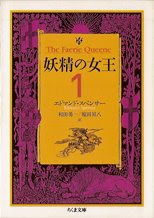

 Posts
Posts


